
Talent Is Overrated.
Why talent alone never makes a story work.
In 2002, Allen Iverson (A.I. the basketball player, not the potentially world-ending computer technology) went on a now-iconic rant:
“We talkin’ about practice? Practice? Not a game. Not the game that I go out there and die for. We talkin’ about practice!?”
He repeated the word practice another twenty-odd times, turning an otherwise forgettable mid-season press conference into a hilariously uncomfortable cultural moment.

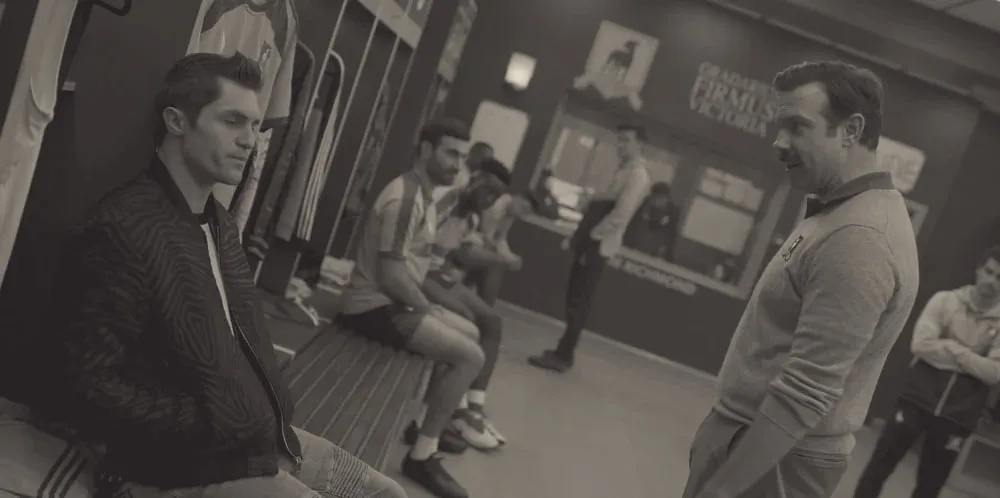
Years later, the writers of Ted Lasso echoed that speech almost beat for beat, this time aimed at Jamie Tartt, the show’s most gifted and most stubborn player. It’s a quiet homage, but also a precise diagnosis: both Iverson and Jamie misunderstand what talent actually is.
Not because they lack it. Because they believe it should be enough.
Talent doesn’t make characters interesting. Misunderstanding does.
What the Jamie Tartts and A.I.’s of the world fail to understand is not that practice, teamwork, mentors, or discipline matter. Everyone knows that. The misunderstanding is subtler and far more dangerous:
They believe talent should work on its own.
And that belief, not the talent, is what makes them interesting characters.
This applies to athletes, sure. But it applies far more cleanly, and far more usefully, to protagonists and antagonists. A character with extraordinary talent and a false belief about how the world works is a story waiting to happen. A character with talent alone is just competent.

At the start of a story, even heroes must be wrong
If Neo understood his own talent at the start of The Matrix, the movie would be short, dull, and over in minutes.
Neo’s gift is what this method calls an Ironic Talent: the most powerful capability in the story, sitting in the person least expected to hold it. Thomas Anderson, a tired nobody in a cubicle, is the one man who can rewrite reality. (Jamie Tartt’s gift, for the record, is the other kind: plain Talent, brilliance exactly where everyone expects it. That’s why his false belief, not his skill, has to do all the dramatic work.)
Neo and Agent Smith share the same trait: both can bend the rules of the Matrix, the simulated world they inhabit. But they also share the same misunderstanding: that only agents are allowed to do so.
The difference is not talent.
The difference is thinking.
Neo begins the story believing the rules apply to him. Smith believes they do not. The story doesn’t turn when Neo becomes more talented. It turns when his understanding of reality changes.
Notice that Jamie and Neo hold opposite beliefs and make the same mistake. Jamie believes his talent is enough. Neo believes he has none. One overrates the gift, the other denies it, and both are wrong about the same thing: what they actually carry. The structure around them is identical; only the direction of the false belief differs. What makes the two stories rhyme is not what the world thinks of either man. It’s that each man is wrong about his own gift.
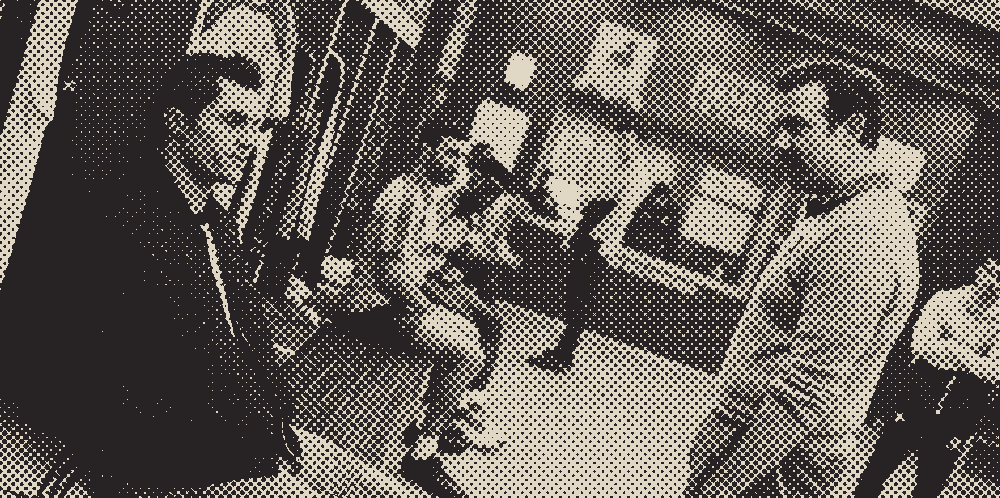
Talent doesn’t change. Thinking does.
This connects directly to a point we explored in a previous article:
traits don’t change; habits do.
Talent is a trait. It’s largely fixed.
Thinking is a habit. It can be unlearned.
In comedies, it must be unlearned.
The limiting belief a protagonist holds (about themselves, the world, or what is possible) is not a personality quirk. It’s the structural reason the story exists at all, and it never travels alone: it’s the thinking that keeps the Bad Habit in place, the behavior the story exists to break. Neo, Aladdin, Rocky, Luke Skywalker, Harry Potter: all are extraordinarily gifted from the start. None of them succeed until they abandon a false belief about what that gift means, or how it is allowed to operate.
The misunderstanding is the obstacle.
Talent is only the potential it blocks.

The Talent Checklist (or: why talent is never enough)
Once you give your protagonist exceptional talent, you must surround it with the structures that delay its full expression. Not to weaken the character, but to make the story possible.
The Matrix supplies the cleanest version. Ted Lasso runs the same structure on Jamie Tartt, stretched across three seasons. Here’s what it looks like.
1. A father figure that reinforces the limiting belief
Neo lives in what he believes is the real world, a world that insists, constantly, that he is ordinary. Systems, jobs, authority figures: all of them reinforce the same message.
You are not special.
This is the function of the King: the authority that keeps the false belief in place. Ted Lasso strips the metaphor away and just casts the father. Everything ugly Jamie believes about his gift (that it exists to dominate, that passing is weakness, that softness gets punished) arrives in James Tartt Sr.’s voice.

2. A mentor who does not share that belief
Morpheus believes Neo is the One long before Neo does. Importantly, he doesn’t argue logically; he simply refuses to share Neo’s worldview.
That refusal is the job of the Universe: mentors don’t give heroes talent. They offer an alternative explanation of reality.
Ted does exactly this for Jamie. He never once questions the gift. He questions what Jamie thinks the gift is for.
3. An antagonist with comparable talent
Agent Smith knows the truth about the Matrix and exploits it ruthlessly. He is immensely capable, just not as capable as Neo will eventually become.
Antagonists aren’t there to oppose morality.
They’re there to expose the limits of the protagonist’s thinking; they are just as limited in their beliefs themselves.
For Jamie, that’s Roy Kent: a legend in the same domain, exactly as good as a club captain is expected to be, and fading. Two carriers of the same talent, each with his own false belief about what it proves.
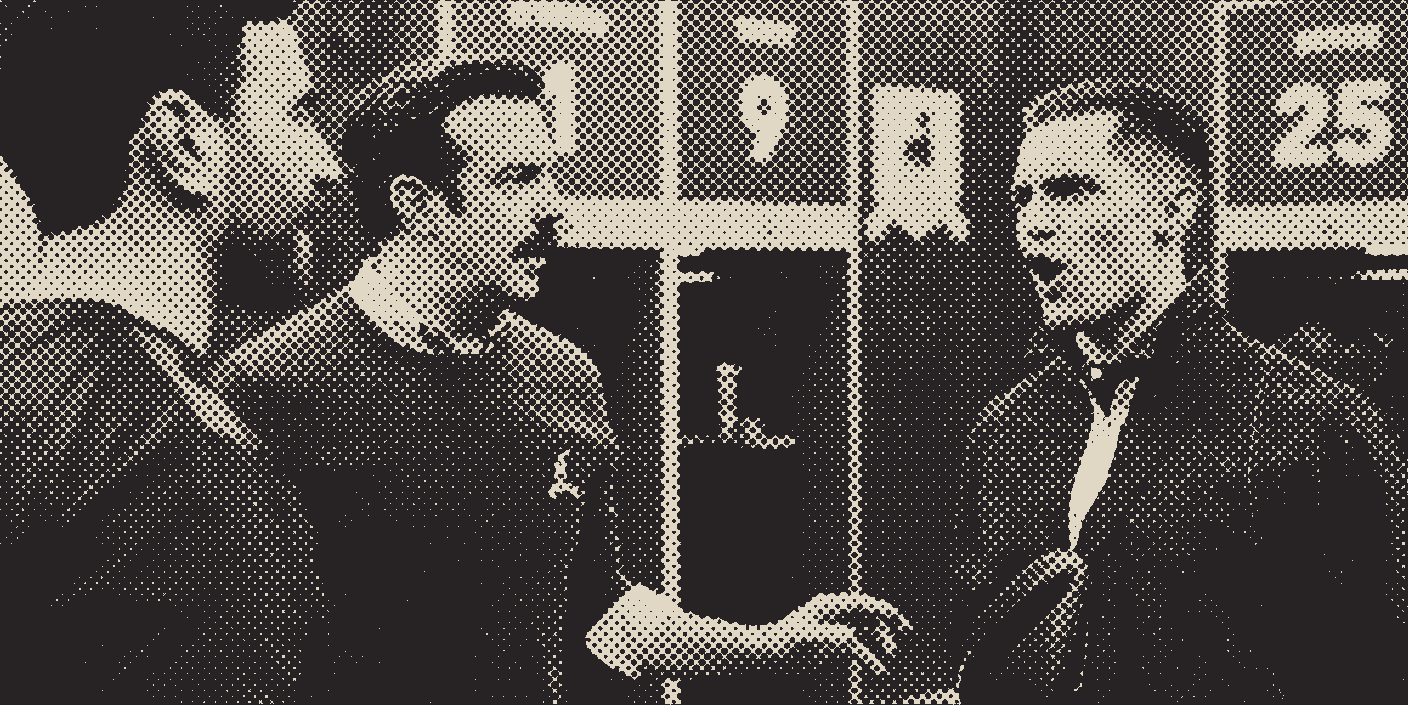
4. Time to fail in a controlled environment (”We talkin’ about practice?!”)
“Nobody makes their first jump.”
Training sequences exist to prove that talent alone doesn’t work — yet. They dramatize the gap between potential and understanding. They also make the final leap believable.
This is where the Iverson homage earns its keep: the rant lands on the one player who treats practice as beneath him. And it’s no accident that Jamie’s real turn begins the moment he starts asking for it, begging Roy to train him at whatever brutal hour Roy chooses.
Yes. Practice matters.
But not for the reason A.I. thinks.
5. A goal that externalizes the misunderstanding
Saving humanity isn’t just a noble aim. It’s a test. Neo cannot succeed while clinging to his old belief system. The goal, Neo’s Heaven on Earth, forces the belief into direct conflict with reality.
6. A moment where belief collapses under pressure
Highly talented characters are often the most stubborn. They hit a wall, doubt themselves, and retreat, until something external forces them to act.
In Neo’s case, it isn’t Morpheus’s faith that finally breaks through. It’s Trinity.
Neo doesn’t win because he believes in himself.
He wins because, for a moment, he forgets his belief entirely.
He sacrifices himself for Morpheus. He dies, exactly as the Oracle predicted. And only when Trinity declares her love, insists on his uniqueness, and places herself in danger does Neo finally abandon the limiting belief altogether.
The talent was always there.
The misunderstanding was preventing it from coming through.
Jamie’s version is quieter and just as structural: the pass. The moment football’s most selfish prodigy lays the ball off instead of taking the shot himself, the belief (talent exists to prove you matter) collapses in real time. Nothing about his gift changed. What changed is what he thought it was for.

Why this matters
Talent doesn’t create story.
Effort doesn’t create story.
Even morality doesn’t create story.
Misunderstanding does.
When talent and misunderstanding pull in opposite directions, narrative tension emerges naturally. When they align, the story collapses, no matter how gifted the character is.
That’s why talent is overrated.
Not because it’s unimportant, but because, on its own, it does nothing at all.
If your characters feel talented but inert, ask yourself one question:
What do they believe about the world that isn’t true?
That belief, not their skill, is what the story is really about.

The Ted Lasso writers understood exactly what they were borrowing. The rant was never about practice. It’s about a player who thinks his gift should be enough, inside a story patiently building every structure that will teach him it isn’t. By the end, Jamie Tartt is the rarest thing in sports fiction: the prodigy who learned to pass. His talent is the least interesting thing about him. It always was.
Want to pressure-test this on your own protagonist? Run them through five questions that test any character arc.
Tale Spinning is a method that grows stories from theme and character outward. Every beat earned, every beat inevitable. Works whether you're writing your own, evaluating someone else's, or developing with a team, across screenplays, novels, comics, and stage plays.
Keep reading

January 2, 2026
Traits Don’t Change. Habits Do. That’s the Whole Story.
Your protagonist cannot become someone new, and shouldn't. Real change is unlearning one self-defeating behavior. The difference between a Trait and a Habit is what makes an ending feel earned instead of arbitrary.
Read →

February 1, 2026
A Practical Diagnostic: 5 Questions to Test Any Character Arc
Five questions to find where a character arc goes soft, tested on Legally Blonde, Mystic River and Nightcrawler. Start with what your protagonist won't do.
Read →Every term used here is defined in the glossary.