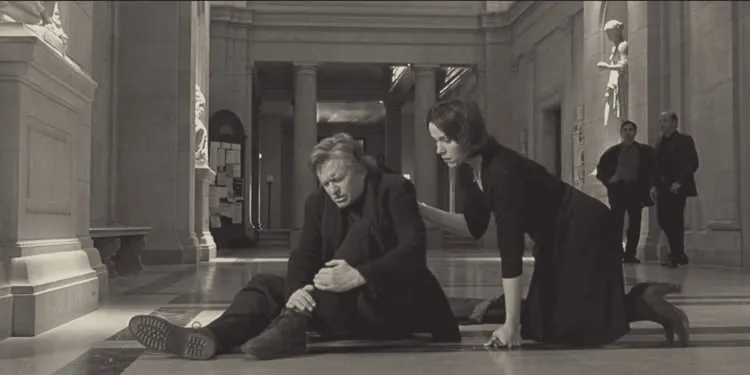
The main character does the right thing and loses anyway, because this world does not pay for decency. Sicario: Kate keeps to the law and is broken for it.
Also known as
Cruel Universe Tragedy
Applies to
Tragedy stories in a Cruel Universe
Cruel Tragedy (Cruel Universe Tragedy)
Definition
A Cruel Tragedy is a story in which the main character does the right thing and loses anyway, because the world of the story does not reward doing the right thing.
In Tale Spinning’s terms: a Story Type in which the Protagonist refuses to give up their Good Habit and the Cruel Universe punishes them for it. The Protagonist is morally admirable. They do the right thing, hold to their values, and lose anyway. The Universe is indifferent or hostile to goodness.
These are the bleakest stories in the four-quadrant system. The audience roots for the Protagonist but cannot save them. The ending is a genuine tragedy, not a moral lesson, but a portrait of a world that grinds good people down.
This is the only one of the four with no settled name outside the method. It gets called bleak, nihilistic, a downer ending, or simply unsatisfying, and that absence of a name is why writers second-guess these drafts hardest. Tale Spinning treats the shape as legitimate and specifies the condition that makes it work: the loss has to read as the world’s verdict, not as the character’s mistake. Get that wrong and a bleak ending lands as a punishment the story never justified, which is the real complaint hiding inside most notes that say an ending is too dark.
Why This Term Matters
Cruel Tragedy completes the four-quadrant system and represents its darkest corner. Understanding it clarifies that the Tale Spinning Method framework is descriptive, not prescriptive — it can map stories that have no redemptive logic, only honest ones.
In a Cruel Tragedy
The Protagonist has a Good Habit they refuse to shed
The Universe is Cruel — moral behaviour is punished
The ending is a genuine loss for the Protagonist and the audience
There is no Heaven on Earth — only defeat
In a Cruel Comedy
See: Cruel Comedy — the Protagonist succeeds by shedding their Good Habit instead of clinging to it.
Examples
Sicario: Kate’s Good Habit is the law itself — process, jurisdiction, the belief that the rules are what separate one side from the other. She refuses to give it up. The Cruel Universe breaks her anyway and then makes her sign for it at gunpoint. Alejandro states the verdict plainly: “You are not a wolf, and this is a land of wolves now.” She survives; the world she believed in does not.
Se7en: Mills’s Good Habit is wholehearted engagement, caring all the way down, in a city built to punish exactly that. His love for his wife is the one thing he will not hold at a distance, and it is the lever John Doe pulls. His final wrath is not the opposite of that love. It is that love, weaponised by a world that knew it was there.
Learn More
For a first introduction to all four Story Types, start with the free Fundamentals Course.
Most writers blame themselves when outlining fails. But the real problem is that popular frameworks like Save the Cat and the Hero's Journey tell you where to put things — not whether they're working. This article introduces a simple diagnostic rooted in classical story structure: find your protagonist's Habit, and ask two questions. The answers will tell you which of four fundamental Story Types you're writing — and give you the structural logic you need to outline with confidence.