
Archer and the King Who Never Loses
Sterling Archer is the best secret agent alive and the least functional adult in any room he enters. He can clear a building of armed men without setting down his drink, then sulk for a week because his mother forgot to call. Fourteen seasons in, the tradecraft has only sharpened and the man has not grown an inch. The show circles the same question episode after episode: why is someone this capable such a catastrophe, and why does he never change? The answer has been sitting in the corner office the entire time, pouring herself a scotch. His mother runs the agency. She always has. Everything wrong with Archer leads back to her, and the show has always known it.
That is what makes Archer worth looking at closely. Plenty of shows and movies give a character a difficult parent. Archer does something more precise, and entirely on purpose: it puts the source of the man’s damage in charge of the world he can never leave. Malory Archer is his mother, his boss, and the highest authority in the only world he has. In the way I read stories, she has a name. She is the King.
The mother who runs the agency
The King is the character who rules the Home World and teaches the Protagonist their Bad Habit. A Bad Habit is a specific thing: the one trait a Protagonist can actually shed, and the one they must. It’s a tactic that works inside the Home World, the Protagonist’s safe space, and reads as a flaw to everyone outside it. Shedding it is the price a Protagonist has to pay to get rewarded with their Happy Ending.
The Home World is the spy-agency. The agency is Malory. Malory is also, literally, the woman who raised him. The parent, the authority, and the world the Protagonist runs on are not three forces pointing the same direction. They are one person with a drink in her hand.
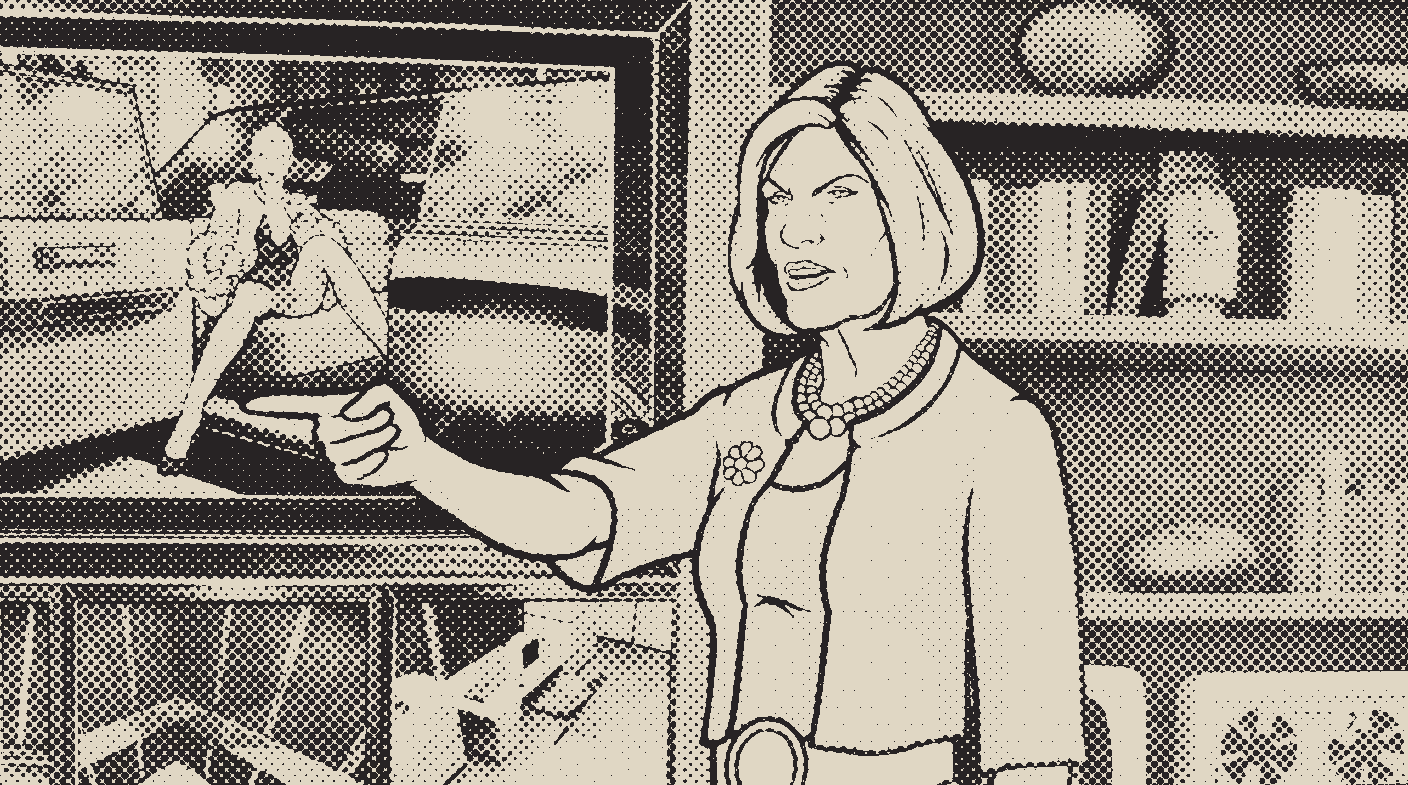
So when Archer reports for a mission, he is reporting to his mother. The approval he wants and the professional approval he needs come from the same withholding source. There is no outside. A normal Protagonist can at least walk out of the Home World and feel the air change. Archer cannot. His job, his family, and the only validation he has ever chased are the same office.
What she taught him
Every King teaches a King’s Law: a survival philosophy that worked, in that world, under those conditions. It is never evil. It is pragmatic. Malory’s Law is the creed of a Cold War spy who raised a son alone while doing the most paranoid job on earth. The work comes first. Sentiment is a liability. A real Archer needs no one. Trust gets you killed, attachment is exposure, so be lethal, be self-sufficient, and never let them see you need anything.
Read it cold and it is almost reasonable. It is how she survived. In its brutal way it is the most honest thing she ever gave him. And it is exactly the thing that wrecks him. The Law she meant as armor became his Bad Habit, and the Habit is plainer than the swagger makes it look: Archer will not commit. He phones it in. To try at full strength, out where someone can see him do it, would be to admit he wants something, and wanting is the one move the Law forbids. So he holds back from all of it. He half-asses the missions. He keeps Lana, his own daughter, everyone who gets close, at gunpoint distance. One trait, two targets, the work and the people, the same reason under both: commitment exposes need, and need is the thing he was taught never to show.
Notice the cruelest part of the arrangement. The same parenting that broke him is what forged the gift. The boy raised to need no one became the agent who can do anything. And the gift is ironic to the bone: espionage at its best is selfless, a man spending his body to save people who will never know his name, and Archer is a man who serves only himself. His Ironic Talent is the most self-sacrificing act there is, handed to the Protagonist least built to perform it. The supreme competence and the ruin come from one hand. You cannot praise the spy and pity the man as if they were separate people. Malory made both, in the same act, out of the same Law.
Why the Habit needs her
Here is the move worth stealing, and it is the whole reason the King matters as a role. Take Malory out of Archer and you do not get a more focused character. You get an unwatchable one.
Without her, Archer is just what he is under the gift and the flaw: a man who serves no one but himself. Strip the origin away and every bad thing he does becomes a flaw he just has, and a flaw with no cause reads as one he simply chose. An audience does not forgive that. They check out.
Put Malory back and the same behaviour reads completely differently. Now the half-assing is a boy refusing to be caught wanting his mother’s approval. The refusal to need anyone is a lesson, not a defect. The man is not broken at random. He was taught, by someone who loved him in the only damaged way she knew, and he believed her.
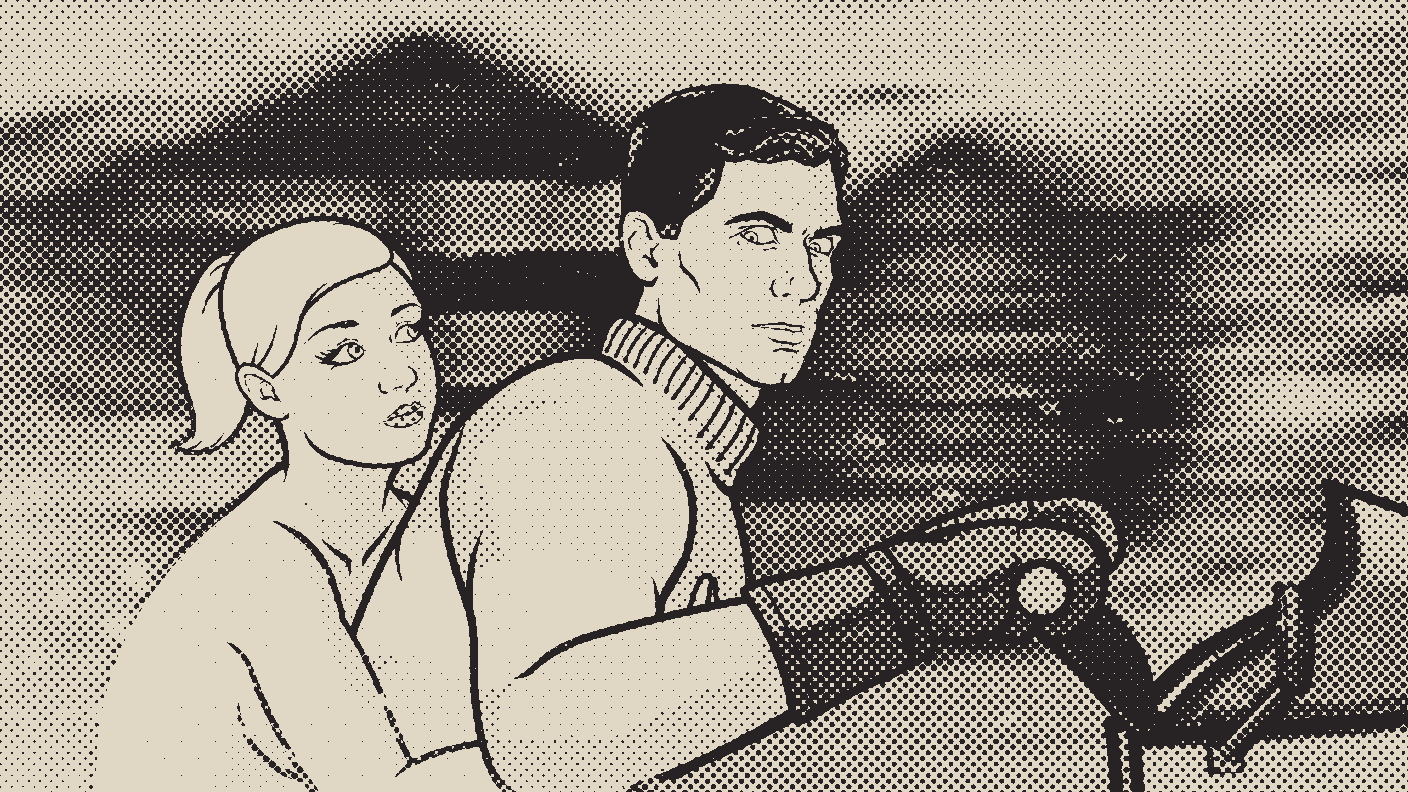
The show even hands you the proof, and it comes out of Archer’s own mouth. In “Swiss Miss,” (S2 E1) the assignment is a bodyguard detail: Malory is courting a Swiss financier as an investor, and Archer is sent to protect the man’s teenage daughter, Anka. Stranded with her on a mountainside, the two of them fall into finishing each other’s sentences about why she acts out: her mother is dead, her father is always working and keeps shipping her off to one camp after another, she is starved for attention, so she overcompensates and comes across as a snob, arrogant, impossible to befriend. It is a flawless diagnosis, and it is line for line a diagnosis of Sterling Archer, which is the joke, because the two of them are building the argument together. Then Anka says it out loud, “you and I are a lot alike,” and he snaps shut: “I don’t do that.” He can read the whole mechanism perfectly in someone else and not see a word of it pointed at himself. That blindness is the King’s work holding. The one wound he cannot name is the one she gave him.
That is the King’s real function. The King is where the Habit comes from, and a Habit with a visible source is a wound an audience can sit with. A Habit with no source is just an unpleasant person. The distance between those two is the distance between a Protagonist you follow and one you abandon, and it is almost entirely the presence or absence of a King.
Who the show sends against him
Name a Protagonist’s Archetype and you have already named his Antagonist, because the two are one shape at different scale. An Antagonist is a more powerful version of the Protagonist’s Archetype: the same thing the Hero is, with fewer limits and more reach. Archer serves only himself, so the men the show sends against him are men who serve only themselves and have built something bigger to do it with.
Barry is the clearest case. He starts as a rival agent, the same job and the same ego, then falls, loses everything, and rebuilds himself into a cyborg whose entire remaining self is one appetite: destroying Archer. He is Archer with the self-interest cranked past reason and the body upgraded to match. After him come the crime lords and rival spymasters, each a man who has bent a whole organization to his own wants where Archer can only bend a room.
The shape of every mission
You can watch the whole pattern play out inside a single episode, because Archer takes essentially the same mission every week, and every one of them runs the same shape.
It starts with an order from Malory. Go back to “Swiss Miss.” The bodyguard job comes with a warning about kidnappers, but there is no information on who they are or what they look like. The mission serves Malory. They always do. And Archer phones it in, the way he phones everything in. The Habit does not wait for a reason.
Then the episode twists the knife, and it works on Archer’s ego, not the mission. He treats the job as beneath him until he sees the target’s photo and perks up, then learns Anka is sixteen and backs off, though no one believes he means it, because he is Archer. When she starts throwing herself at him, the room sees only what Archer taught it to see: a famous womanizer leering at a teenager. So they bench him. He sulks: “You don’t want the world’s greatest secret agent on the case? Fine!” That is what checks him all the way out. Not the danger, not the job. Being told he isn’t wanted.
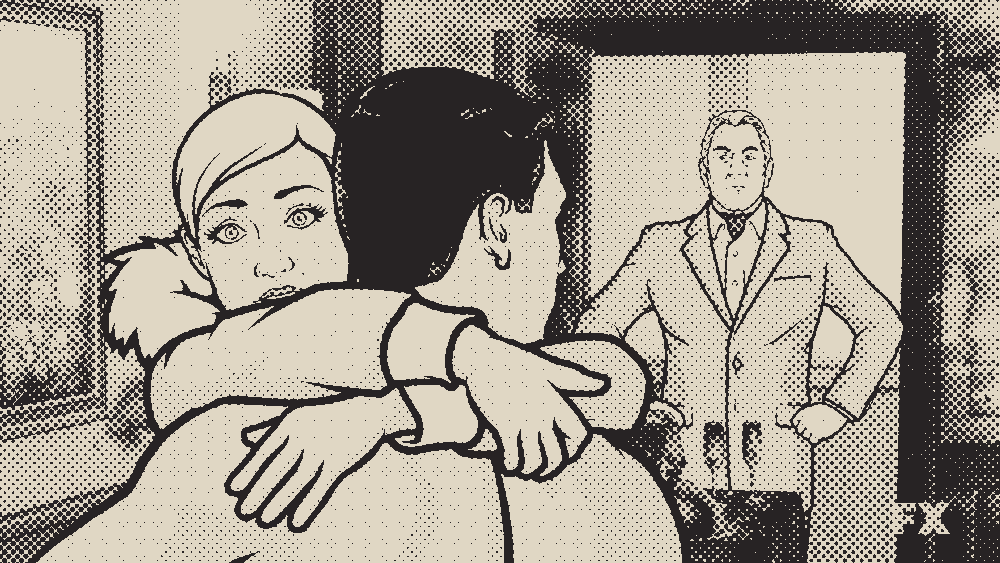
And it is right then, sidelined, that he walks straight into the real kidnappers and burns one of their faces off. No one believes that either. His reputation buries the truth. The Bad Habit Malory installed doesn’t just wreck his relationships, it makes him impossible to believe the one time he isn’t lying.
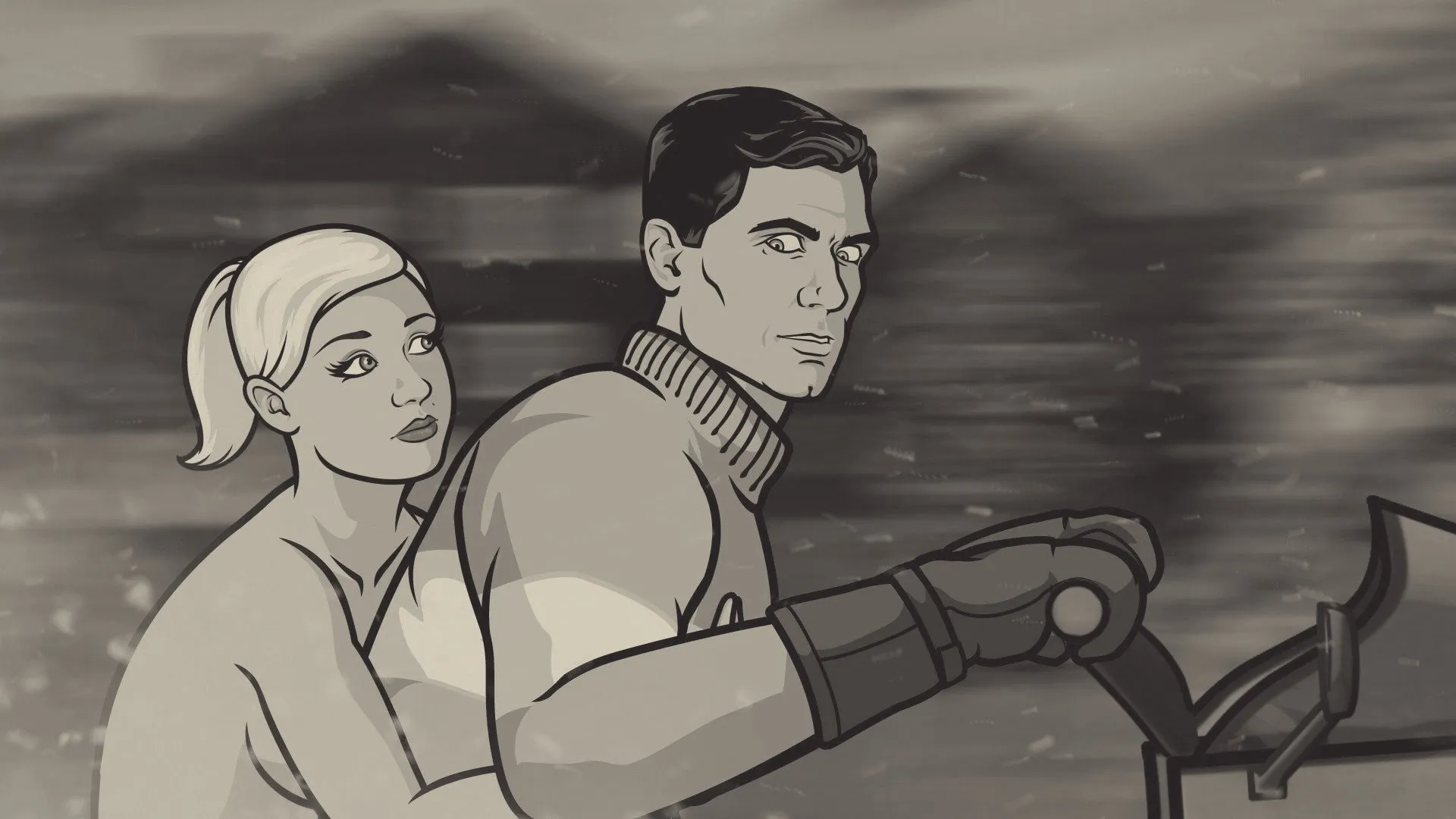
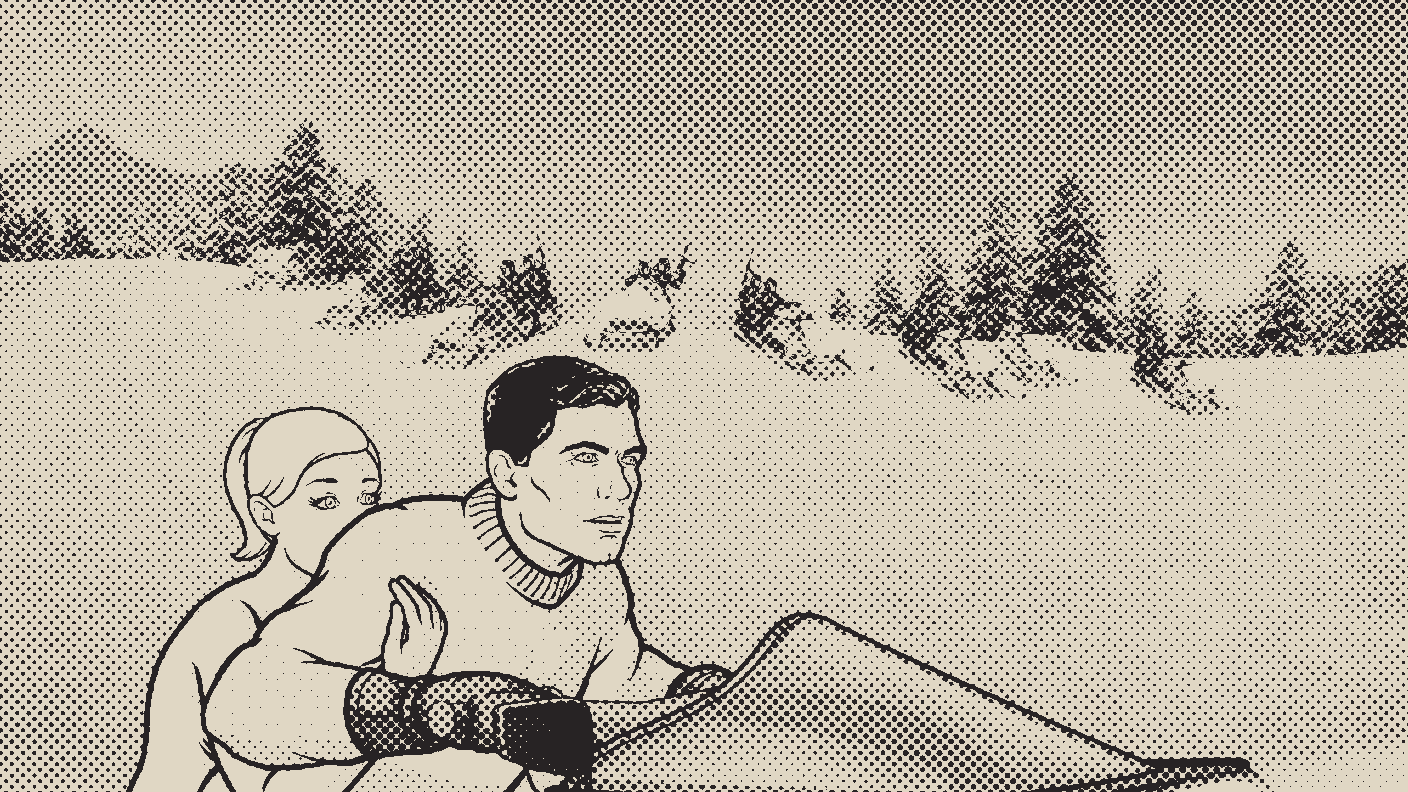
At the midpoint the kidnappers come back, and Archer is vindicated. That “I told you so” is the whole of it. He locks in, drops the act, and the Talent arrives at last in full: a long snowmobile chase, the best agent alive finally bothering to be the best agent alive.
Look at what flipped him. Not the girl, not the mission. Being proven right after being made a fool of. The thing that finally lifts his Moral Strength to the surface is recognition, the single supply Malory has starved him of his whole life. That is his Muse, and its smallness is the point. A Muse is meant to be strong enough to pull a Protagonist out of the Home World for good. Archer’s is a chance to say “I told you so.” It can light him for one act. It cannot outweigh his mother.
And the mission? While Archer saves the girl, Malory spends the climax drinking green russians into a haze with Pam and the financier, who passes out somewhere off the page and is never mentioned again. The deal she came for dies by her own hand, killed by the exact appetite her Law celebrates. The show never confirms it. You only infer the failure later, from the investor’s permanent absence. A story that cared about the mission would resolve it. Archer doesn’t, because the mission was never the point. The point was a few minutes of a man switched all the way on, and then the lights going back down. And notice what it costs Malory: nothing. She loses the deal and keeps the son. A King’s hold was never about winning.
That is not just the plot of this episode. It is the shape under nine in ten of them, season after season: an order from the King that serves only her, a man who cannot be bothered, a Muse too small to matter, a few scenes of who he could be, reset. Name that shape and you have your answer for why Archer never grows. There is nothing to grow toward. Every week, the board goes back exactly as it was.
The King who never loses
In most stories the King is a starting position, not a destination. The Protagonist runs on the King’s Law through the first half, wins something with it that turns out to be hollow, then spends the back half learning the Law was never enough. He sheds the Bad Habit. He outgrows the Home World. He reaches a Heaven on Earth the Law could never have bought him. The King’s grip is the problem the ending solves.
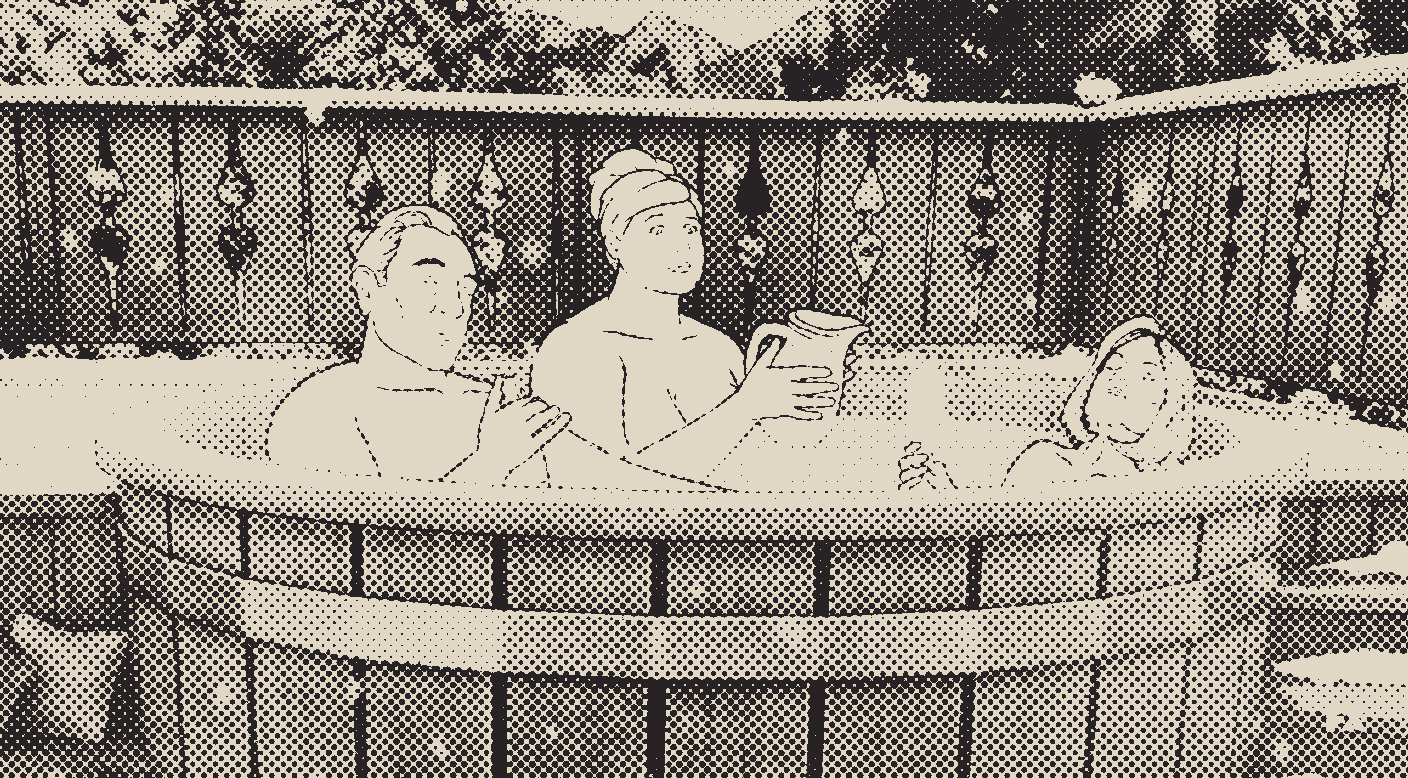
But that ending is the one thing episodic television can’t give. A film sheds the Bad Habit once and rolls credits. A series whose Protagonist sheds it is a series that’s over, so the medium works the other way by design: the same Bad Habit comes back every week, dealt with and never shed, the lesson withheld until the finale, if a finale ever comes. A long-running show is built on a Protagonist who is never allowed to grow up. What it needs is a reason.
Archer’s reason is named Malory, and her permanence is not a failure of the show. It is the show. She never releases him, so he never sheds the Habit, so he never grows up, a Protagonist stuck in a permanent first half. A character who outgrows his King gets a finale. A character whose King will never let go gets a fourteenth season. The thing that makes Archer funny and the thing that keeps him a child are the same thing, and the thing is the King.
What it looks like when the King lets go
It is worth seeing the opposite, because the contrast is the lesson. Will Hunting (In Good Will Hunting) has a King too, and for most of the film it looks like his best friend Chuckie. Will’s Home World is South Boston, and its Law is the inverse of Malory’s while doing the identical job: stay loyal, stay small, don’t get above the people you came from, because reaching past the ceiling is a kind of betrayal. Chuckie embodies it just by showing up every morning, cheerful and without pretension. Will’s genius is the Talent South Boston has no room for, and his self-sabotage is the Habit that keeps him safely one of the guys. The film spends its entire first act making that Law feel like truth, letting you believe Chuckie is the ceiling, the man keeping Will exactly where he is.

Then Chuckie gives the speech that turns the whole thing over. He tells Will that if he is still in this neighbourhood in twenty years he will kill him. That the best part of his own day is the ten seconds before he knocks, when he lets himself hope Will has finally left without saying goodbye. That is a King dismantling his own Law out loud. The person who taught Will to stay is the one who releases him, and because the King lets go, Will gets to leave.
That is the beat Malory will never give Archer. Chuckie loves Will enough to evict him from the Home World. Malory loves Archer in the only way she has, which is to keep him. One King opens his hand and the Protagonist walks into a life. The other never will, and her son stays the best spy in the world and a boy waiting in the corner office for a call.
Two stories could not look less alike. A foul-mouthed cartoon about a narcissistic super-spy and a tender drama about a Boston janitor share no tone, no rating, no world. Underneath they are running the same role, asking the same question: who taught the Protagonist the thing that is killing him, and will that person ever take it back. It is the same move as a rat and a hitman turning out to be one story: surface is free, structure is load-bearing. Name the King and you can see the shape of a character before they have done anything. You can see, in the first scene, exactly what the last scene will have to cost.
Tale Spinning is a method that grows stories from theme and character outward. Every beat earned, every beat inevitable. Works whether you're writing your own, evaluating someone else's, or developing with a team, across screenplays, novels, comics, and stage plays.
Keep reading


March 31, 2026
What Should Happen in the First Act of a Story
Most first act advice tells you what to include — introduce your protagonist, establish the world, end with an inciting incident. But none of it explains what the first act is actually for. This article argues that the first act has one job: to prove that the protagonist's Habit works. Using Good Will Hunting as a case study, it breaks down the two sequences of the first act, the Home World, the Archetype, the King and the King's Law — and shows how the best first acts plant a theme twist that doesn't detonate until the very end.
Read →
June 14, 2026
In Bruges and Ratatouille Are the Same Movie
A Pixar film about a rat and a brutal crime film about hitmen run on the exact same structure: same protagonist, same false victory, same earned, honest ending. On the surface they share nothing; underneath, they are the same story. Here is the breakdown, beat for beat, and why it is structure, not surface, that makes a story work.
Read →Every term used here is defined in the glossary.