
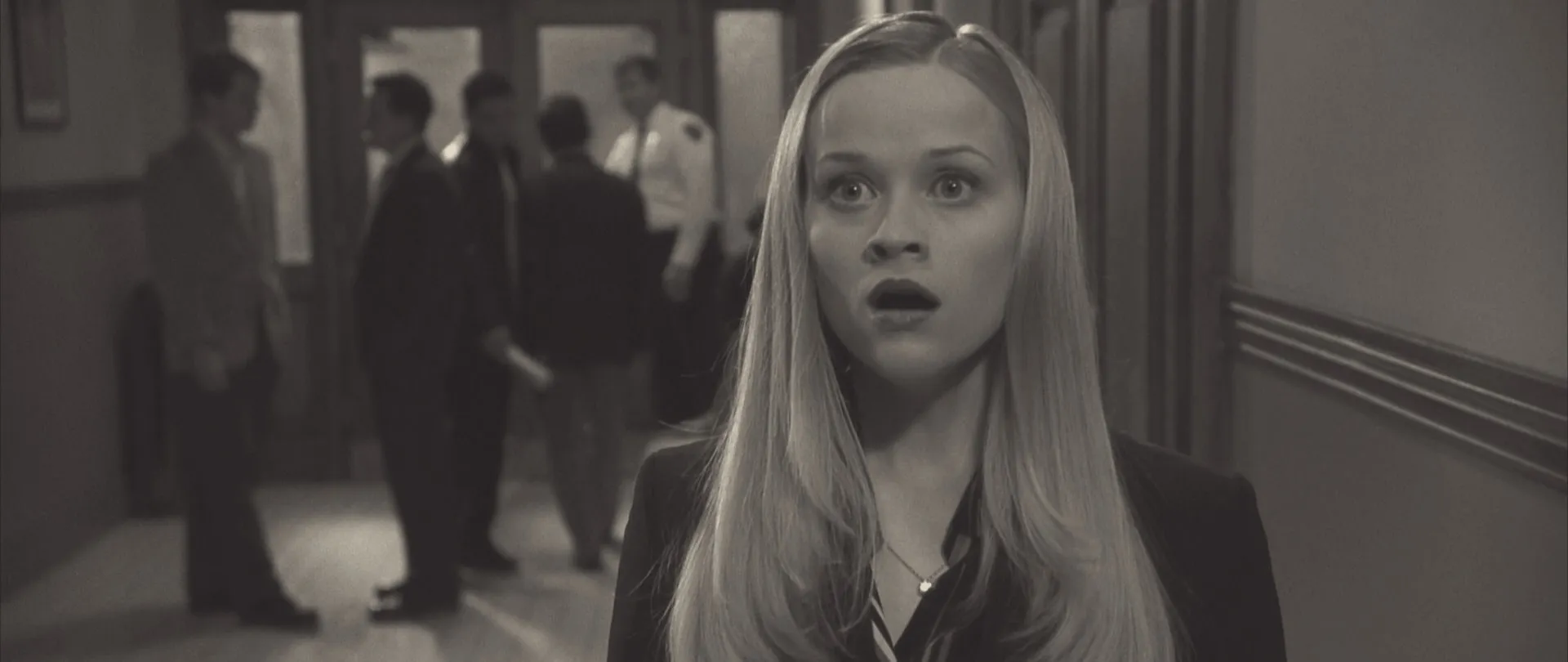
Elle Woods is not held back by other people’s low expectations. She is held back by her own Habit. And her Habit is not self-doubt. It is the opposite of self-doubt. Elle Woods is completely confident in the wrong thing.
What Elle Woods’ Character Arc Is Really About
She has spent her entire life performing femininity so fluently that she has never had to find out what she could actually do. The sorority presidency, the wardrobe, the social ease, the careful management of how she is perceived. These are not surface decorations over her real self. They are the cage she built around it. The moment Warner breaks up with her, something cracks open. Not her confidence, which never wavers, but the assumption underneath it: that the performance was the whole of her.
The rest of the film is the story of what happens when she is forced to find out it wasn’t.

This reading matters because almost every existing analysis of Legally Blonde treats Elle’s journey as an empowerment arc. Underestimated woman proves herself, wins the respect of a world that wrote her off. That reading is not wrong. It is just incomplete in a way that makes the film impossible to learn from. If Elle’s problem is that other people underestimate her, then the film is about them changing. If Elle’s problem is that she has built her entire identity around a performance that has always worked, then the film is about her changing, and suddenly every scene starts doing something more precise than inspiration.
Three other readings of Legally Blonde keep recurring alongside this one. It is often called a feminist film, vindicating a woman who refuses to flatten herself to be taken seriously. It is sometimes read as a film whose message is to never judge by appearance, never underestimate. And it is sometimes read as a comedy of class and codes, where the joke is Harvard’s inability to see past its own taste. None of these readings are wrong. They are describing real surfaces of the film. But each of them, like the empowerment-arc reading, places the meaning outside Elle — in the world that judges her, in the lesson the audience absorbs, in the institution that finally gets corrected. The reading that opens the film up is the one that places the meaning inside her.
The first cracks in Elle’s self-knowledge come not from the world being cruel to her, but from her first encounter with a world that operates on different terms than the one she grew up in. That is where the film quietly becomes one of the sharpest-built comedies of its era.
The Marilyn vs Jackie Speech, Explained.
Warner gives the cage a name. “If I’m going to be a senator by the time I’m thirty, I need to marry a Jackie, not a Marilyn.”
This is what the Tale Spinning Method calls the King’s Law stated in a single line, and it is much more insidious than it looks. Warner is not insulting Elle. He is classifying her. There is nothing wrong with being a Marilyn. Marilyns are beautiful, charming, adored, desirable. What Marilyns are not, according to Warner’s Law, is serious. You are the category that performs, or you are the category that has substance. You can be one or the other. You cannot be both.
The King’s Law in any story, is the reason why the Protagonist behaves the way they do at the beginning of a story. This is the Law Elle has lived under her entire life, and the reason she has never questioned it is that it has always worked in her favor. In her world, a fictional version of USC Greek life, the world of people who look a certain way and know the right people, being a Marilyn was a winning position. The Law only becomes visible the moment it stops being a compliment and becomes a ceiling.
What makes the Law so elegant as a story engine is that Elle never actually rejects it on its own terms. She does not spend the film trying to stop being a Marilyn. That would be a different, much worse film. The one where the heroine sheds her femininity to earn her seriousness, the Hollywood makeover in reverse. Instead she spends the film discovering that the Law’s categories were false. The bend-and-snap and the LSAT score. The pink suit and the cross-examination. The sorority president and the Harvard Law class speaker. The rule that Warner reiterates to her when he calls her a Marilyn, forbids the combination. The film proves the combination is the whole point.
The Performance That Never Had to Be Tested
At USC, Elle’s archetype has always worked. Sorority president, highest-status figure in her entire social world. Look the part, be charming, manage perception. These things produced results. They opened doors, they won people over, they got her everything she currently had. The performance and the substance were indistinguishable because nothing in her life had ever forced the distinction.
The film understands this, which is why it stages her arrival at Harvard Law the way it does. Pink convertible. Chihuahua in a handbag. A wardrobe that reads as costume to everyone who sees it. The Strange World responds exactly as the Home World’s Law said it would respond to a Marilyn: it writes her off on sight. Every instinct Elle has, the ones that worked her entire life, now produces the wrong result.
But here is what most readings of the film miss. Harvard is not cruel. Harvard is simply different. It rewards substance rather than performance, work rather than signalling, the thing itself rather than its appearance. The Law Elle was raised on does not operate here, and the Strange World is waiting for the thing underneath her performance. It will keep waiting until she finds it.
The Habit is what prevents her from finding it. Not confidence, not ambition, not intelligence. Those she has in abundance. What she does not have, yet, is the willingness to be seen without the performance in place. The performance has always been there first. It has always done the work of being her, so she has never had to.
The Talent Hiding in the Archetype
Here is the move the film makes that most of its imitators get wrong: Elle’s actual ability is not separate from her archetype. It is generated by it.
She has an [Ironic Talent] for law. Genuine legal intuition, precise to the point of being almost uncanny. She reads people with exceptional accuracy. She spots inconsistencies that trained lawyers miss. She constructs arguments instinctively. She understands human motivation at a level most of her classmates, trained to think abstractly about law, simply do not. And all of this comes directly from the skill set she built managing a sorority: reading rooms, managing social calculus, noticing who is lying and who is hiding what.
The irony is structural, not cosmetic. The sorority president in the pink convertible is the figure the legal world has spent the most energy training itself not to take seriously, and she happens to have, buried inside exactly that archetype, the specific set of skills the legal world most needs. There is a massive gap between what Harvard sees when it looks at Elle and what Elle can actually do.
What the Habit does is make the Talent invisible to everyone, including Elle. The performance runs the interference. Charm gets her into rooms, surface makes people comfortable, and the legal intuition operates underneath without ever being named as the thing doing the work. She cannot see her own Talent because her performance keeps arriving first.
This is why the final showdown in the courtroom is the crucial scene it is. She is not performing femininity instead of lawyering. She is lawyering through femininity, using her knowledge of hair care, the most sorority-president knowledge imaginable, as a genuine forensic instrument. The Archetype and the Talent are finally running at the same time, in public, without one hiding the other.
The Mirror That Makes the Habit Visible
To understand how structurally tight this film actually is, watch what Professor Callahan does.
Callahan has exactly the same Habit as Elle. He manages surface over substance. He mistakes performance for ability in both directions simultaneously. He underestimates Elle because she performs the wrong kind of surface, and he overestimates his own stature because he has always performed the right kind. The difference is that Callahan’s Habit is hardened, corrupted by power, and completely unapologetic. He selects interns by appearance. He runs his practice as a performance of legal authority rather than an instance of it. He is what the Habit looks like when it never gets corrected.
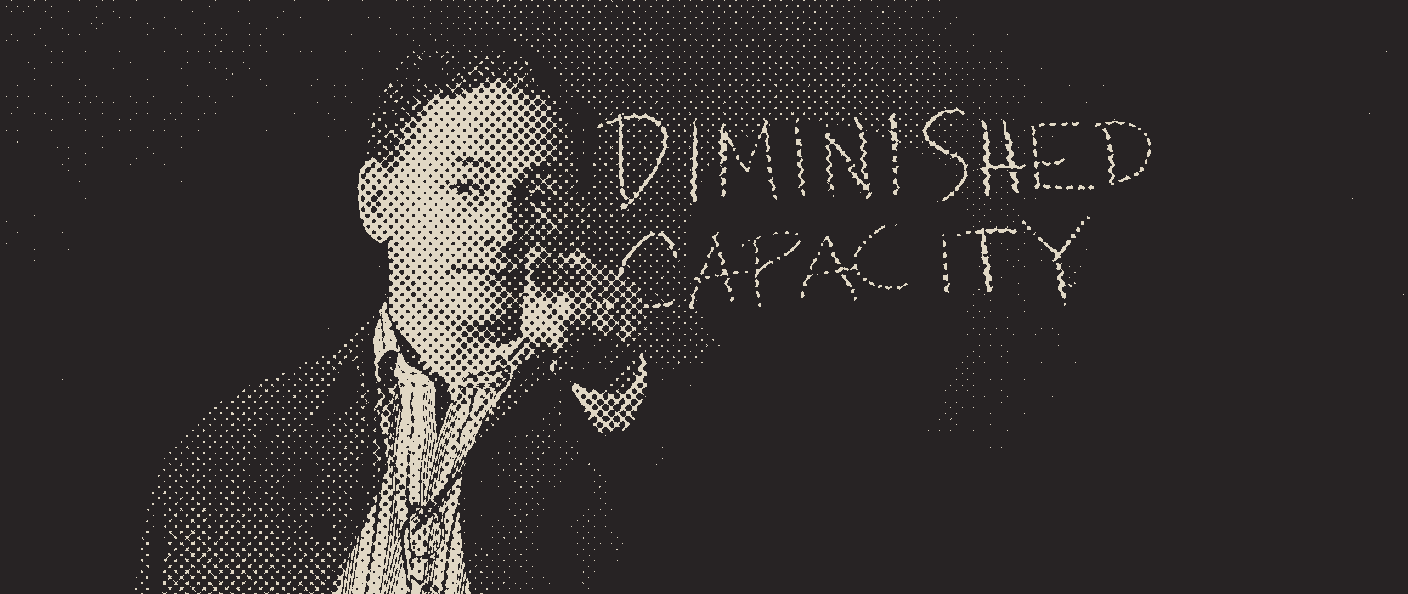
When he makes his move on Elle, what he is doing is structurally the same thing Warner did at the start: treating Elle as a surface rather than a person. But worse, because he has more power and does it by choice. He is the mirror the film is holding up. This is where the Habit goes if you never shed it. This is who you become. The film does not need Elle to lecture anyone about this. It just needs her to see it, and to get up and leave.
The power of the scene comes from the fact that Callahan is not a villain in the usual sense. He is a preview of Elle’s own future if she keeps the performance intact. She walks out of his office not just because she is offended, but because she has just seen the end state of her own Habit and understood that she does not want to become it.
The Quiet Audit
One of the film’s subtlest pleasures is the character of Vivian, because on first watch she appears to be an antagonist and on a second watch she turns out to be something more interesting. Vivian is the character whose judgment the film teaches us to trust.
She is not corrupted like Callahan and she is not a transplant like Elle. She is a native of the Strange World’s legitimate value system: she is here for the work. Throughout Act 2 she voices the Strange World’s default reading of Elle, dismissive, suspicious, unconvinced. When Elle gets the internship, Vivian does not warm up, and this is correct. Elle won the internship the wrong way. Callahan picked her for her surface. The character whose verdict matters most does not ratify a victory that was won by the Habit.
Vivian only turns when Elle meets the real standard. Not when she succeeds on Callahan’s corrupted terms, but when she refuses him and quits, when integrity costs her the prize. That is when the verdict comes: Vivians subtle look of disappointment in herself when Emmett tells her what happened. She jumped to conclusions. She was wrong about Elle. The audience knows, in that beat, that the shift is real, because the character whose judgment we have learned to trust has delivered it.

This is different from the Callahan arc and different from the Warner arc. Callahan is the mirror. Warner is the voice of the Home World’s Law. Vivian is the Strange World’s honest reader, and the film needs her to hold her judgment until Elle has actually earned it. The moment she turns is the moment the audience is allowed to start believing in Elle’s transformation as something the story itself has ratified rather than something we are being asked to cheer for.
The Woman in the Cage
The most common misreading of Legally Blonde treats Emmett as the emotional center of the film, and Brooke Wyndham as a plot device, the client whose case Elle happens to win. The structure is actually the reverse.
Brooke is a Muse. She is the character whose fate forces Elle’s final sacrifice, and the one who embodies, in a specific and costly way, the moral strength that Elle’s Habit has been preventing her from developing.
Here is what Brooke is doing that nothing else in the film does. She is publicly on trial, accused of murder, facing prison, with every incentive in the world to tone down the fitness-celebrity persona. The safe play for a woman in her position is to dress conservatively, perform seriousness, and let the lawyers speak for her. That is exactly what Warner’s Law would prescribe: downgrade the Marilyn, put on the Jackie, survive. Brooke does not do this. She stays herself. She wears what she wears. She speaks the way she speaks. She refuses to give up her alibi even though it would save her, because the alibi would cost her the thing she actually is. That is not vanity. That is the Moral Strength Elle needs to learn.
The alibi itself is the Muse’s lesson made literal. Brooke trusts Elle specifically because Elle is a Delta Nu. She reads the surface correctly as containing substance. She shows Elle, in a single scene, that the thing Warner used to rule Elle out of a serious life is the exact thing that can earn another woman’s deepest trust under the worst possible conditions. The performance and the reality can be the same thing. Surface and substance are not in competition. A Muse embodies the moral position; Brooke embodies it under duress, which is the version that teaches.
And Brooke fails the competence test cleanly. She is completely, structurally helpless in Elle’s domain. She does not know the law. She cannot defend herself. Her freedom depends entirely on someone else’s legal ability, which is the precise asymmetry the Muse relationship requires. Elle has what Brooke needs. Brooke has what Elle needs. Neither one can save the other by imitation.
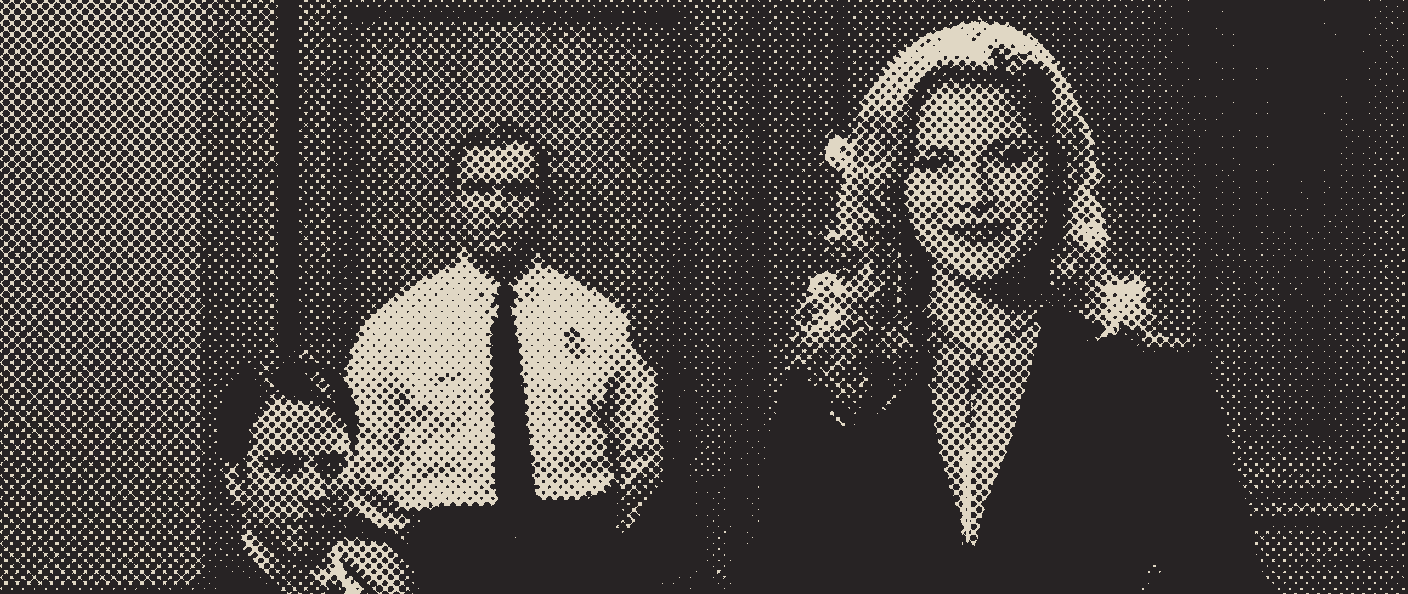
The climax is where this lands hardest. Elle takes over the cross-examination not because her own career requires it, not because Emmett does, but because if she fails, Brooke goes to prison. Brooke is the one in the cage. The sacrifice is real, because the stakes are real, and because the person on the other end of the sacrifice is the one who taught Elle, by her own example, that the thing Elle had been hiding was worth staking a life on.
When a protagonist drops the Habit, they drop it for someone. The Muse is who they drop it for.
There is only one critique I have on the script of Legally Blonde and it has to do with Brooke: The Muse usually enters the story toward the end of Act 1. Brooke does not appear until we are well into the second half of the film, which means that for a long stretch the story is powered entirely by Elle’s pursuit of Warner. Until Brooke shows up, there is no larger goal in play than winning him back, and the film feels slightly episodic as a result, almost like two different stories stitched together. It is handled gracefully enough that most viewers do not notice, but you can feel the seam. If Brooke had been introduced earlier, even just as a news story or a name attached to a case Callahan is about to take, not necessarily to Elle directly, the whole film would have pulled through its first half with the weight of what it is actually about already present in the frame.
Two Voices from the Real World
Harvard is the Strange World, but it is not the film’s moral authority. Harvard is a partly corrupted version of the world Elle is actually trying to enter, and the film is careful to show this through two characters who represent the real thing from inside the institution.
The first is Emmett. He is a Harvard lawyer, trained in the same system that produced Callahan, but somehow untouched by its corruption. He works nights. He shares an office. He dresses badly. He has no interest in the performance of legal authority that governs Callahan’s world, and no instinct for managing perception. What he has instead is the thing the real professional world actually runs on: competence without self-promotion, integrity without moralizing, the steady unflashy habit of doing the work and telling the truth. He is what Harvard Law is supposed to produce when it isn’t producing Callahans.
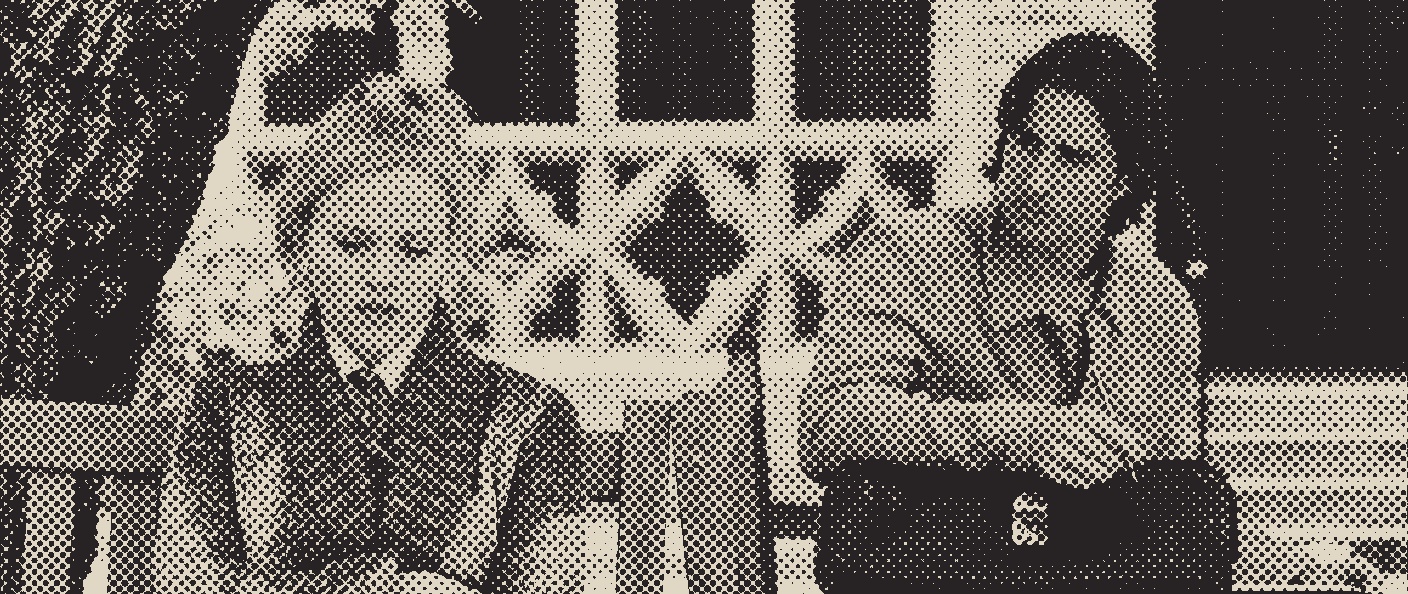
The second is Professor Stromwell. She is also a Harvard professor, but like Emmett she is not operating by Harvard’s corrupted standard. She is operating by the professional world’s actual one. When Elle is ready to quit and go home, the Habit having failed her in the worst possible way and reasserting itself as an escape, Stromwell finds her in the nail salon and delivers the line that turns her around: “If you’re going to let one stupid prick ruin your life, you’re not the girl I thought you were.” This is not encouragement and it is not mentorship. It is the real world telling Elle what its standard is.
The reason the film has two of these characters rather than one is that the moral authority in Legally Blonde is not a person, it is a kind of person. People inside the Strange World who refuse to be corrupted by its local distortions. Emmett shows what the Law looks like when it is lived quietly. Stromwell states it directly in a single sentence. Between them they triangulate the standard Elle is being measured against, a standard that has nothing to do with Harvard’s hierarchy or Warner’s Law, and everything to do with whether she can finally be herself at full power.
The fact that Emmett is also Elle’s eventual love interest is not the structural point. It is the reward. She ends up with him because by the end of the film she has become the kind of person the real world recognizes, and he is already that kind of person, and they now occupy the same world. That is what a Kind ending looks like. The romance is consonance, not cause.
The Return of the Old World
Before the courtroom, the film does one more beautiful thing. It brings the old Law back one final time, in the most concentrated possible form, and gives Elle the chance to choose it.
Warner finds her on the way out of the courthouse. He tells her he wants her back now that she has proven herself. The exact words are almost a formal re-statement of his Law: you do not need to work this hard, come home, the performance was enough all along. This is the Home World arriving in the Strange World in the form of the person who first enforced the Law. The Habit wants to say yes. The Habit has never wanted anything else.
What Elle says instead is the line that ends the old Law’s rule over her: “If I’m going to be a partner in a law firm by the time I’m thirty, I need a boyfriend who’s not such a complete bonehead.” She rejects the Marilyn/Jackie classification by inversion. She is going to be a partner. She is going to be both. She is about to prove it.
The Shedding
The cross-examination is the moment Elle drops the Habit. Not the performance of femininity. She keeps every visible piece of that: the pink, the hair, the voice, the instinct for reading a room. She drops the use of femininity as a shield. She stands up in a courtroom and lawyers at full power, through the archetype rather than around it. Knowledge of hair-care chemistry becomes forensic evidence. Sorority-honed social reading becomes cross-examination. The rat is cooking in full view of the kitchen.
She is a Marilyn and a Jackie in the same breath, and the Law that said she had to choose is simply, visibly false.
And she is doing all of this with a woman’s freedom on the line. Not her own career, not her own dignity, but Brooke’s actual prison sentence. The Muse’s fate and the McGuffin have collapsed into the same object: winning the case is saving Brooke, and saving Brooke is the thing that requires Elle to finally stop hiding. The sacrifice and the victory are the same gesture.
The witness breaks. The case turns. The Universe delivers.
(If you want to learn what this moment looks like when the Protagonist refuses to drop their Bad Habit instead, take a look at this companion article on a great Kind Tragedy: Mystic River)
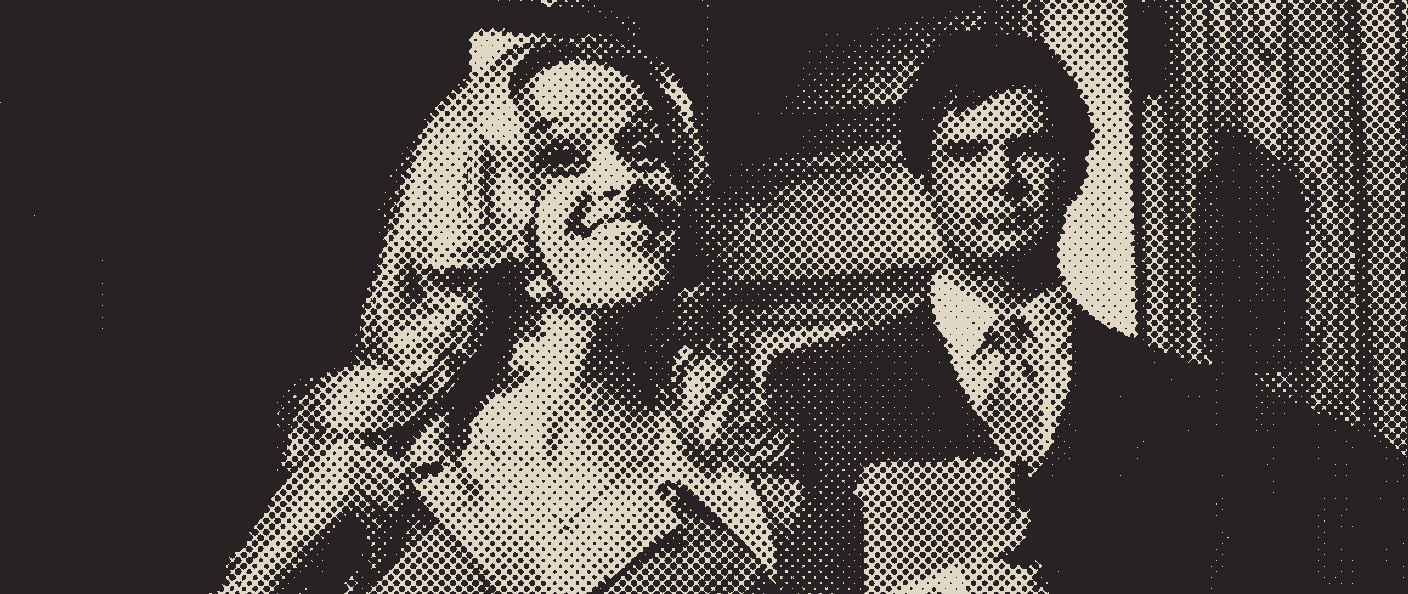
The Genie That Made It All Possible
One last thing, because it is easy to miss and it is what makes the film’s design complete.
The reason Elle can do what she does in the courtroom, the reason the cross-examination works at all, is that the specific skill she is deploying is the same social fluency she has been using her entire life. Reading people. Holding a room. Extracting information through warmth rather than aggression. Knowing, at a physical level, when a woman is lying about her hair.
In the framework I use, this kind of social currency is called a Genie. A Genie is the thing that makes the Protagonist’s Talent operate in the Strange World, the mechanism by which legal intuition, in Elle’s case, actually reaches a witness or wins a room. Her Genie is her femininity and her charm, the entire performed surface. It is what gets her Paulette at the nail salon. It is what gets Brooke to trust her with the alibi in the first place. It is what cracks Chutney open on the stand.
And it is what Callahan removes from her in a single moment. When he makes his pass, he poisons her ability to use the surface in his world. The Habit that had always hidden behind the Genie is suddenly exposed, because the Genie has been taken away. This is the thing that makes the Crisis function as a real structural pivot rather than just a bad moment for the character. It is not only that Callahan is a creep. It is that the social fluency Elle has always relied on has just become the reason she cannot stay.
When she walks back into the courtroom and uses that same fluency, chemistry knowledge, girl-talk intuition, the ability to warm up a hostile witness, she is using the Genie without the Habit. The same instrument, no longer hiding anything. That is the difference between the first half of the film and the second.
What She Actually Wins
Elle does not win Warner. By the time the film ends he has become irrelevant, not because he is punished but because he simply no longer applies. He was the crack in the foundation. The foundation has been rebuilt.
What Elle wins is a legal career built on the full, unperformed self. Marilyn and Jackie at once. She graduates as class speaker. The people who dismissed her archetype now see what it contains. She did not become someone else to succeed. She did not adopt the performance of seriousness that Warner and Callahan required. She found out what was underneath her own performance and led with that instead. She saved a woman from prison by being more of herself, not less.

And she shares the ending with the people who always saw her clearly: Emmett, and a Vivian who has delivered her verdict, and a Brooke who walked free because Elle finally trusted what she was made of.
The genius of the film is that the transformation was never about acquiring something new. Everything Elle needed was already there. The Habit was what kept it hidden, from the world and from her. The film is about what happens when that stops being true.
What This Means For Your Story
If you take anything from Legally Blonde as a writer, take this:
Your protagonist’s Habit is almost never their weakness. It is usually a strategy that worked brilliantly in the world that raised them, and that has become a substitute for the thing they actually are. Ask what they are performing instead of being. Ask what they have built around themselves that has worked well enough that they have never had to find out what is underneath.
Your King’s Law should be quotable. Warner’s Marilyn/Jackie formulation is a model. If you cannot state your antagonistic world-view in a single line that sounds like something a real person would say, it is not doing its job. The best Laws are classifications, not insults.
Your Strange World is not the enemy. The Strange World is the place the Habit stops working. That is different from cruelty. The question that starts your story is: what is the specific moment when your protagonist’s usual strategy fails, not because the world is against them, but because the world is simply playing by different rules than the one that taught them the Habit?
The kind universe is on your protagonist’s side from the first frame. It just will not give them what they need until they stop hiding.
APPENDIX: FULL STRUCTURAL MAP
For readers who have already finished one of the Tale Spinning courses and want the complete breakdown:
- Protagonist: Elle Woods. Archetype: sorority president. Ironic Talent: legal intuition. Habit: performing femininity as substitute for substance.
- Antagonist: Professor Callahan. Same Habit as Elle, performance over substance, corrupted by power and choice.
- Muse: Brooke Wyndham. Moral strength: be unapologetically what you are, even under conditions that make it costly. Structurally helpless in Elle’s Talent domain (cannot defend herself, depends on Elle’s legal ability for her freedom). The climactic sacrifice is for her.
- King: Warner. Law: “you’re a Marilyn, not a Jackie.” Performs both the initial Law-setting and the Return of the King on the bench.
- Referee/Judge: Vivian. Native to the Strange World’s legitimate value system. Withholds her verdict until Elle earns it by refusing Callahan.
- Universe: the real professional world, with two mouthpieces inside the institution. Emmett lives the Law quietly; Professor Stromwell states it directly. Emmett’s role as romantic partner at the end is the reward, not the structural engine.
- Genie: Elle’s social fluency. Femininity, charm, performed surface. Passes all four Genie tests: transferable, removable, Talent-dependent, Habit-concealing.
- McGuffin: the Callahan internship (Act 1 to Act 2) transitioning to the Chutney case (Act 2 to Act 3). At the climax, the McGuffin and the Muse’s fate collapse into the same object: winning the case is saving Brooke.
- Heaven on Earth: a legal career built on the full, unperformed self. Marilyn and Jackie at once. Shared with Emmett, Vivian, and a Brooke who walks free.
Tale Spinning is a method that grows stories from theme and character outward. Every beat earned, every beat inevitable. Works whether you're writing your own, evaluating someone else's, or developing with a team, across screenplays, novels, comics, and stage plays.
Keep reading
April 27, 2026
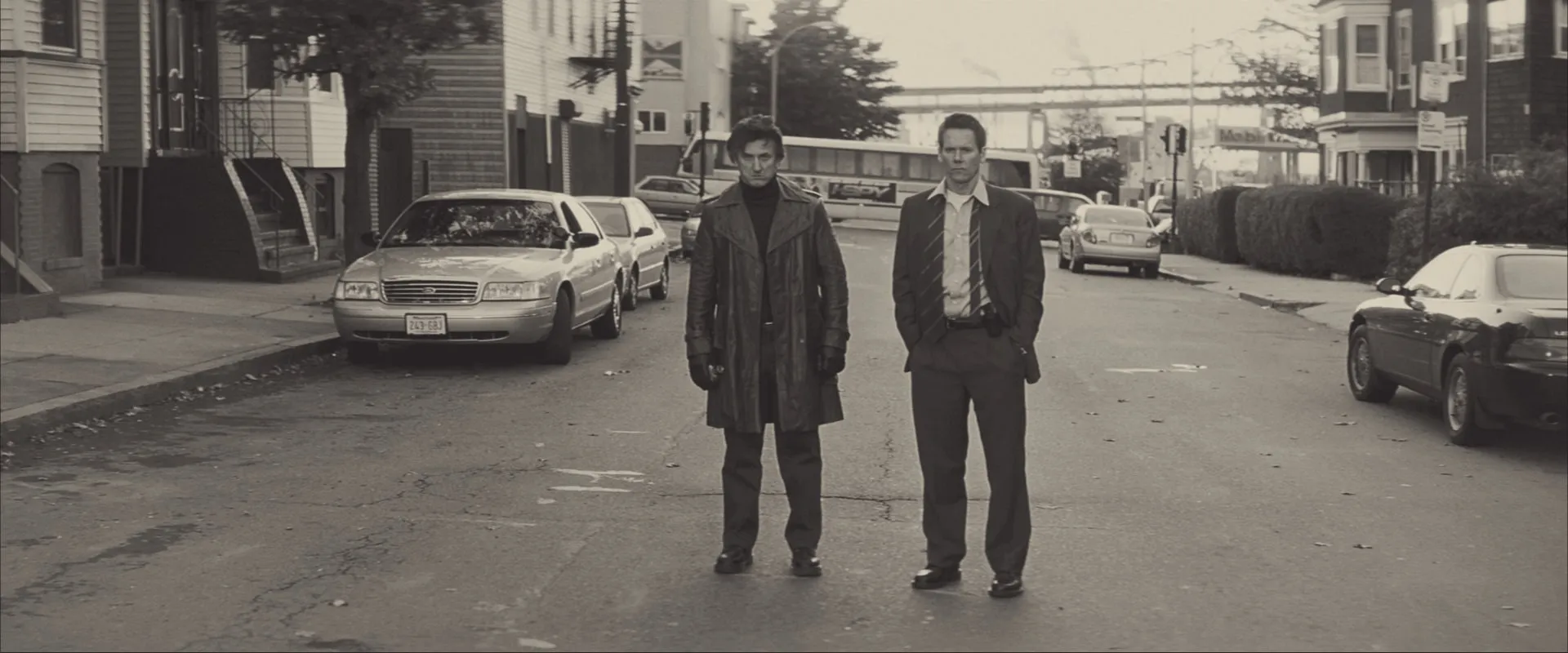
Mystic River and the Three Responses to One Wound
Mystic River opens with three eleven-year-old boys writing their names in wet cement. One of them gets taken. The other two grow up to become the protagonist and antagonist of one of the cleanest Kind Tragedies in modern cinema. A structural reading of how the same wound produces three different lives, and why this film, more than most, shows what happens when a Protagonist refuses to drop his Bad Habit.
Read →
June 14, 2026
In Bruges and Ratatouille: The Same Story Underneath
A Pixar film about a rat and a brutal crime film about hitmen run on the exact same structure: same protagonist, same false victory, same earned, honest ending. On the surface they share nothing; underneath, they are the same story. Here is the breakdown, beat for beat, and why it is structure, not surface, that makes a story work.
Read →Every term used here is defined in the glossary.