Why Are Side Characters More Interesting Than the Main Character?
You know this feeling. The best friend writes herself. The boss gets all the good lines. Every time the rival walks in, your pages wake up. Then you cut back to your main character, and they are standing in the middle of the room, reacting to everybody else.
Side characters are often more interesting than the main character because they have the easier job. A good side character is one thing at full volume: they believe something, they act on it, and the story never presses them to give it up. The main character is the one being pulled between those beliefs, and without a strong Habit of their own to act on, they just stand there while more vivid people happen around them. The fix is not to tone the side characters down. It is to give your Protagonist a Bad Habit and put it to work from their first scene.
So don’t rewrite the best friend or the boss. Those characters are doing fine. The one who needs work is your Protagonist.
Your side characters got the fun job
Think about what you have asked each of them to do.
Your supporting characters only need one note. The friend who says yes to everything. The boss who cares about nothing but results. You always know what they will do in a scene, and it is a pleasure to watch them do it, because they never stop to wonder if they are right.
Your Protagonist has the hard job. They came into the story with a way of getting by, which I call the Bad Habit. Maybe they hide. Maybe they put the job first. Maybe they look after themselves and nobody else. And the story is going to spend two hours pressing on it until they drop the Bad Habit. This is the entire point of most stories.
I think of stories as having three main characters, not one. In the Tale Spinning Method, I call them the Trifecta. On one side of your Protagonist stands someone who lives the opposite of the Habit: that is the Muse. On the other side stands someone who does the Habit at full strength: that is the Antagonist. Each of them gets to be an extreme. Your Protagonist has to stand between them and be torn.
Being torn is what makes a Protagonist worth watching. But it only works if there is something to tear. If your Protagonist has no Habit they are actively using, there is nothing pulling against anything. They are just polite and worried, and next to two people who know exactly who they are, they disappear.
Here is how three films handle it, and what you can take from each one for your own pages.
Let one of them be the opposite of the Habit
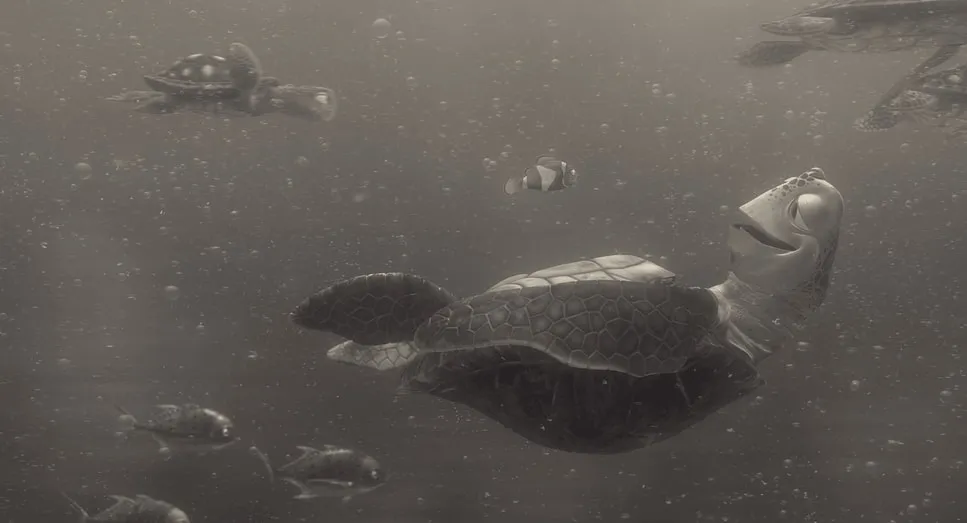
Nobody comes out of Finding Nemo quoting Marlin. They come out quoting Dory.
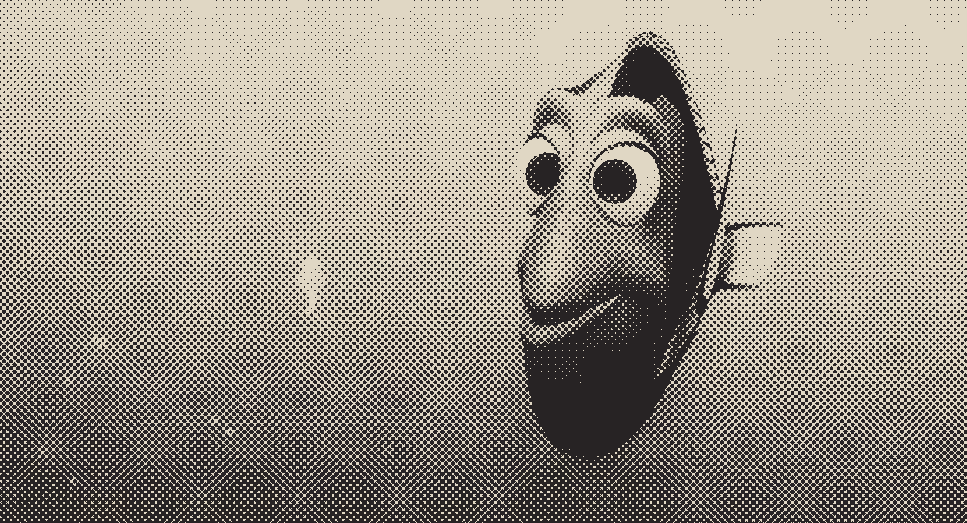
Marlin is a clownfish, the smallest creature in a very big ocean, and hiding is how he stays safe. The film shows you exactly where that comes from. In the first few minutes a barracuda attacks. When Marlin wakes up, his wife is gone, and so are all of their eggs but one. “I promise I will never let anything happen to you, Nemo,” he says.
Then it is Nemo’s first day of school, and Marlin is keeping that promise much too hard. “What do we need to remember about the ocean?” he asks. “It’s not safe.” When the kids dare each other to go near a boat, Marlin swoops in to save Nemo. Nemo answers by swimming to the boat, and a diver takes him. The thing Marlin does to keep his son safe is the thing that loses him.
Chasing the boat in a panic, he runs into Dory, a fish with no short-term memory. Within minutes they have met Bruce, a great white shark, and landed in a meeting of sharks who have sworn off eating fish. “Fish are friends, not food.” Marlin is terrified. Dory is having a lovely time.
She is the funniest thing in the film, and she has it easy. She doesn’t have an arc to get through. She doesn’t have to learn to trust anybody, because she already does. She only has to be Dory, in every scene, while Marlin has to deal with her. She gives him her whole philosophy in three words: “Just keep swimming.”
Marlin wants none of it. At the jellyfish he refuses to listen to her, and it nearly kills them both. It takes until they are stuck inside a whale for him to finally trust her, and that is what gets them out. Dory hasn’t changed at all. She is the same fish he ran into at the start. He is the one who moved.
My favorite moment comes near the end, when Marlin believes Nemo is gone and wants to forget all of it. The fish who can’t remember anything is the one asking him to stay.
For your draft: find the side character your readers love most. What comes easily to them that your Protagonist could never do? If the answer is the exact opposite of the Habit, leave them alone and give the two of them more scenes together. If it has nothing to do with the Habit, you have a fun character who isn’t pressing on anything. Change what they are fearless about.
Let another one be the Habit at full strength
Everybody remembers Miranda Priestly. A lot of people could not tell you much about Andy’s first half hour in The Devil Wears Prada, and there is a reason for that.
Andy’s Bad Habit is putting the job before her people. Miranda does the same thing, from the very top, without a moment of doubt. She is cruel to her assistants. She takes Andy to Paris instead of Emily, and makes Andy be the one to tell her. When her own job is threatened, she saves it by giving away the job Nigel had just landed. Nobody in the film presses her to stop. She just gets to be Miranda.
And for a good stretch of the film, Andy really is the dull one in the room. She barely knows what to do. She takes the abuse and complains about it. Mostly we are watching to see what Miranda will do to her next.
Then Miranda tells her she has been a bigger disappointment than anyone else, and Andy goes to Nigel for sympathy. He doesn’t give her any. “You are not trying,” he tells her.

So she asks him to dress her. She stops complaining and starts wanting something. From that moment she is using the Habit herself, the job first and whatever it takes, and the film comes alive around her. Miranda didn’t get any less interesting. Andy just finally has something to do in the same scene.
For your draft: find the character in your story who does your Protagonist’s Habit and doesn’t have to. Let them go all the way. Then find the moment your Protagonist stops complaining about that person and starts wanting what they have. If that moment comes late, move it up. It is usually where your story starts.
Now put your Protagonist’s Habit to work
A Protagonist stops disappearing the moment they start doing the wrong thing on purpose.
Edge of Tomorrow could easily have lost its Protagonist, Cage. Rita, the war hero known as the Angel of Verdun, is as vivid as anyone in an action film. She knows what is going on before he does. She kills Cage herself when he gets hurt in training. On paper, Cage should spend the whole film standing next to her and looking small.
He doesn’t, and the reason is in his first few minutes on screen.
Cage is a public relations officer. A general tells him he is going to the front. And Cage, a coward, does not sit there being worried about it. He tries to blackmail the general. That is his Bad Habit, looking after himself at anyone else’s expense, and it is already busy. It gets him arrested and dropped on the beach, but it is his own move, and it is a terrible one, and we can’t stop watching him make it.
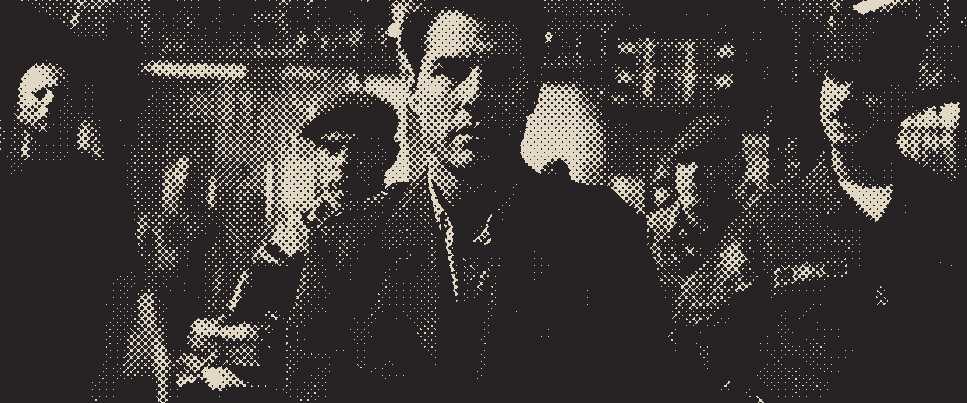
He keeps making them. When the day starts over, he tries to talk his way out. He tries to make friends with the squad. He tries to run. Later, with the training done, he walks out and goes for a drink. Every one of those is the Habit doing something, so even when Rita is the most impressive person in the scene, Cage is the one we are following. We want to know what terrible idea he has next.
That is the difference between a coward and a boring coward. A boring coward waits. Cage schemes.
For your draft: go to your Protagonist’s first scene. What do they do that is wrong? Not what they feel, not what happens to them. Write down the action. If you can’t find one, that is why they are fading. Give them a bad idea and let them carry it out, in front of us, in the first few pages. It can be small. A lie, a dodge, a shortcut. As long as it is theirs.
If your Protagonist still disappears
Read a scene where your side characters are shining, and ask yourself three things.
What does your Protagonist want in this scene? If the answer is “to get through it,” they are furniture. Give them something to go after, even something stupid.
Is your Protagonist doing the Habit, or just having it? A character who feels afraid is less interesting than a character who lies to avoid being afraid. Turn the feeling into a move.
Is somebody pressing on it? If your side characters are funny but have no opinion about your Protagonist’s Habit, they will go flat the moment the jokes run out. Each one should either do it, oppose it, or have something to say about it.
And when you are done, resist the urge to give the best friend an arc as well. Most of them don’t need one. A side character can change after your Protagonist shows the way, but they are at their best when they stay exactly who they are. That is what makes them so much fun, and it is what gives your Protagonist something to push against.
Let your side characters be extreme. Make your main character the one who has to choose.
Tale Spinning is a method that grows stories from theme and character outward. Every beat earned, every beat inevitable. Works whether you're writing your own, evaluating someone else's, or developing with a team, across screenplays, novels, comics, and stage plays.
Keep reading
March 6, 2026
Why Your Character Feels Flat (And How to Fix It)
Most writers try to fix flat characters by adding backstory or personality details. But flatness is a structural problem, not a creative one. This article explains why every character in a story needs a specific Habit — and a defined opinion about the protagonist's Habit. Using The Game as a case study, it breaks down exactly why some characters feel vivid and necessary while others feel decorative, and gives you a two-question diagnostic you can apply to any character in your story right now.
Read →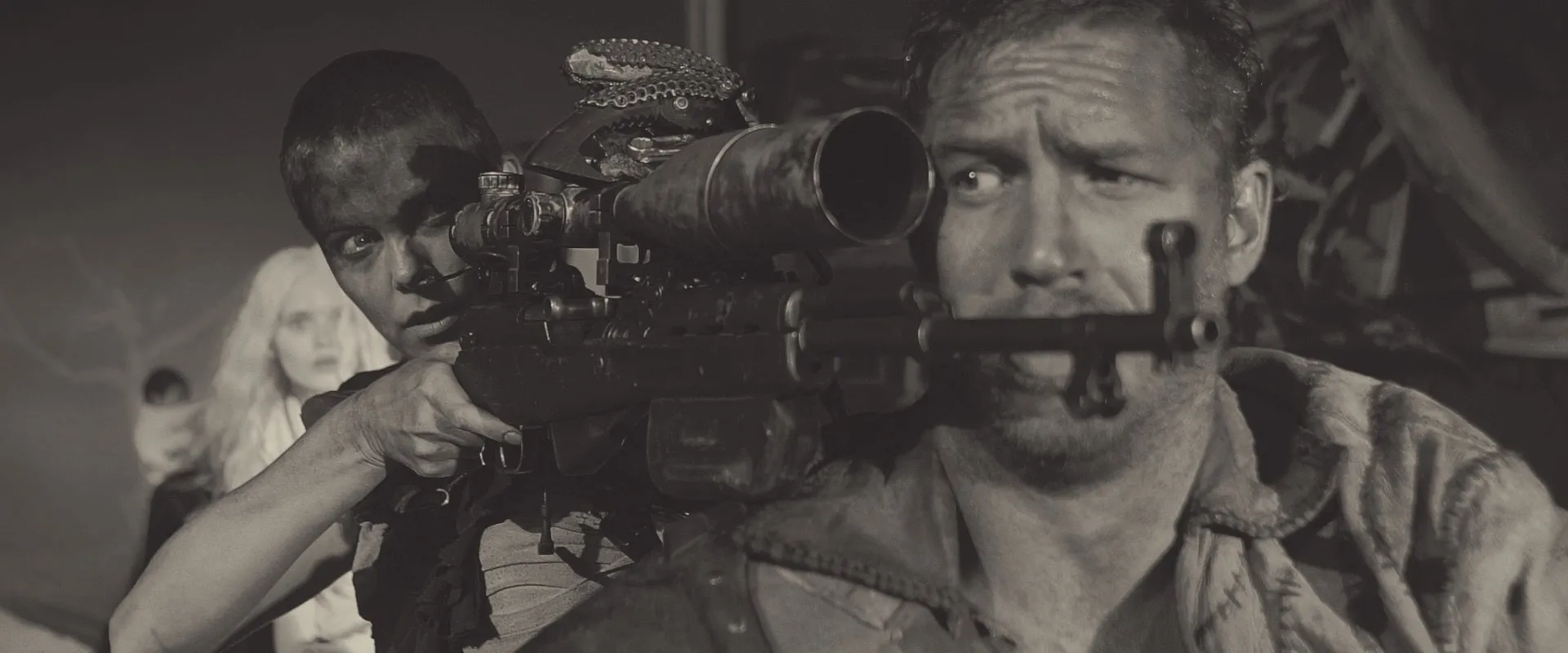
September 6, 2026
How to Write a Protagonist Who Does Almost Nothing
A passive protagonist is usually a working habit the story hasn't priced yet. How to fix one without adding plot, with Casablanca, Spirited Away and Fury Road.
Read →Every term used here is defined in the glossary.