A run of scenes that plays out the consequences of one decision and ends with the next one. Every story has eight.
Applies to
All Story Types
Sequence
Definition
A series of scenes showing the consequences of the Protagonist’s decisions. There are eight sequences in every story, arranged in a circle. Each sequence ends with a Transition Scene — a moment where the Protagonist makes a decision that launches the next sequence.
Sequences are named alphabetically: A, B, C, D (first half), and AA, BB, CC, DD (second half). Each sequence in the second half mirrors and inverts its partner in the first.
Why This Term Matters
The sequence is the working unit of Tale Spinning story structure. When outlining, you are not writing scenes one by one — you are building sequences. A sequence has an internal logic: it begins with the consequences of the last Transition Scene, escalates through cause-and-effect, and ends when the Protagonist is forced into a new decision. Thinking in sequences prevents the most common outlining failure: adding scenes that do not escalate anything and therefore do not belong.
What Each Sequence Does
Each sequence has a specific structural job in the story:
Sequence A — establishes the Home World, the Protagonist’s Archetype and Habit, the King, and the King’s Law
Sequence B — moves the Protagonist into the Strange World; forms the partnership with the Muse; the Genie is established
Sequence C — the Referee appears; the McGuffin is made official; the competition begins in earnest
Sequence D — the battle for the McGuffin; the Protagonist wins using the Habit and the Genie; false victory at the Midpoint
Sequence AA — mirrors A; the Home World pulls the Protagonist back; the Habit reasserts itself
Sequence BB — mirrors B; the partnership with the Muse comes under pressure; the Genie is threatened
Sequence CC — mirrors C; the Judge appears; the Genie is removed; the Protagonist must face the Strange World without their cover
Sequence DD — mirrors D; the Protagonist sheds the Habit; Heaven on Earth is reached
In a Kind Comedy — Examples
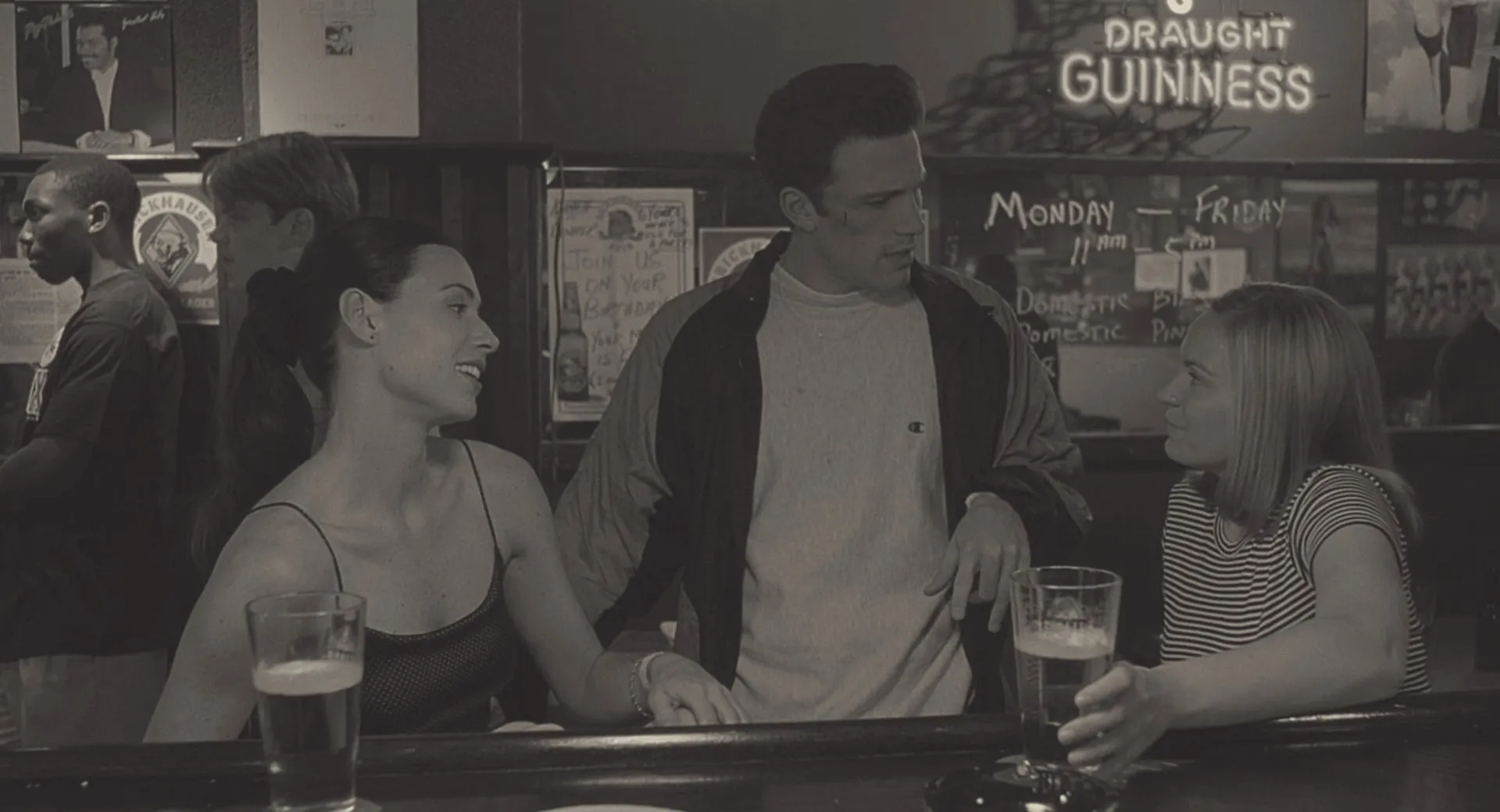
What Should Happen in the First Act (article) covers Sequences A and B in detail using Good Will Hunting: how the Home World and King’s Law are established in A, and how the challenge that launches the Protagonist into the Strange World bridges A to B.
In a Tragedy
Coming soon.
Learn More
All eight sequences are taught in full in the Kind Comedy Course, with complete sequence-by-sequence analysis of Ratatouille and In Bruges. The free Fundamentals Course introduces the Circle and the sequence structure.
Most first act advice tells you what to include — introduce your protagonist, establish the world, end with an inciting incident. But none of it explains what the first act is actually for. This article argues that the first act has one job: to prove that the protagonist's Habit works. Using Good Will Hunting as a case study, it breaks down the two sequences of the first act, the Home World, the Archetype, the King and the King's Law — and shows how the best first acts plant a theme twist that doesn't detonate until the very end.